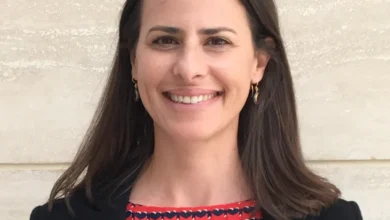
Decoding Aging: Inside Emma Glass and the Buck Institute Quest to Build Digital Human Cells


The pursuit of human longevity has long relied on physical experimentation—growing cells in petri dishes, testing chemical compounds manually, and observing biological reactions over extended periods. However, a quiet revolution is underway at the Buck Institute for Research on Aging in Novato, California. Scientists are moving away from purely physical trial-and-error methodologies and stepping into the realm of computational biology. At the vanguard of this shift is Dr. Emma Glass, a research scientist in the laboratory of James Yurkovich, who is applying advanced computational microbiology to simulate life at the cellular level. Funded in part by the Defense Advanced Research Projects Agency (DARPA), Glass and her colleagues are building sophisticated whole-cell simulation software designed to predict bacterial behavior and, ultimately, unlock the foundational mechanics of human aging.
The Genesis of a Computational Pioneer

Dr. Glass’s journey to the forefront of longevity science is rooted in a robust academic foundation. A native of Virginia, she earned her Bachelor of Science in Applied Mathematics from the College of William & Mary, developing a deep analytical framework for complex systems. She subsequently pursued a Ph.D. in Biomedical Engineering at the University of Virginia, where her doctoral research focused on computational microbiology—laying the groundwork for her eventual transition into aging research.
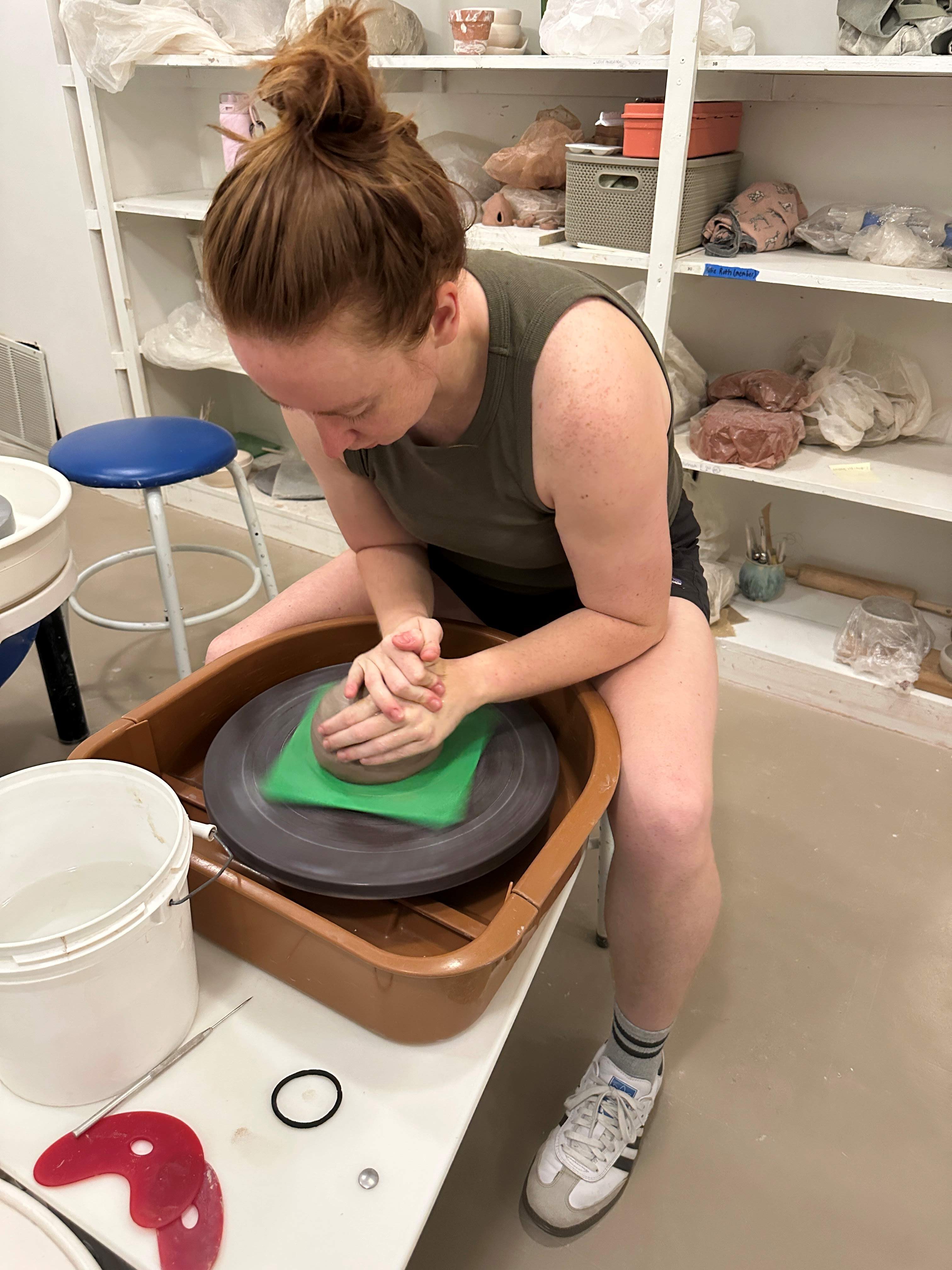
Joining the Buck Institute just over a year ago, Glass found an environment specifically tailored to her unique intersection of mathematical modeling and biological science. Her recruitment aligns with the institution’s broader strategic push to leverage artificial intelligence and big data to untangle the complexities of biological decline. Outside her computational work at the Buck, Glass maintains a balanced academic and personal life, engaging in outdoor pursuits across the San Francisco Bay Area, reading, knitting, playing ultimate frisbee, and practicing pottery. Yet, her professional focus remains fixed on the monumental task of bridging microscopic data with macroscopic health outcomes.
The Core Research: From E. coli to Human Cellular Dynamics

The primary objective of Glass’s current research—backed by DARPA funding—is the creation of comprehensive computational simulations that can accurately forecast the behavioral responses of Escherichia coli (E. coli) when subjected to fluctuating environmental conditions. By leveraging these predictive digital models, researchers can calculate the precise concentration of antimicrobials required to inhibit bacterial growth without needing to run physical laboratory assays on petri dishes.
While optimizing antibiotic treatments provides immediate clinical utility, the broader strategic vision extends far beyond microbiology. The whole-cell E. coli simulator serves as a critical proof-of-concept and a structural blueprint. By successfully mapping every molecular interaction, metabolic pathway, and genetic response of a single bacterium within a digital environment, the research team is establishing the computational architecture necessary to eventually simulate human cells. Understanding the precise computational rules that govern cellular stability in microbes provides the methodological stepping stone required to comprehend why and how human cells experience functional decline over time.
Collaborative Frameworks and the Power of Team Science
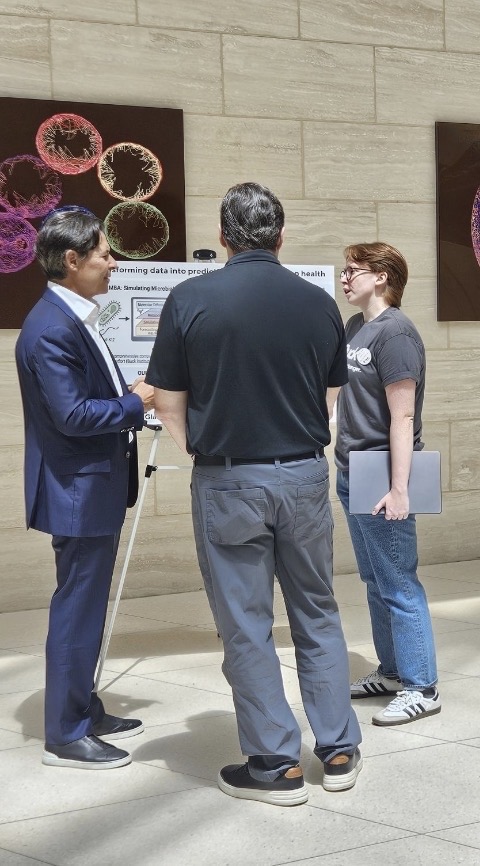
Tackling a scientific objective as ambitious as whole-cell simulation requires a departure from traditional, siloed academic research. At the Buck Institute, Glass operates within a highly collaborative ecosystem that bridges multiple disciplines, seamlessly integrating computational power with experimental biology.
The lab’s operational structure is divided into two primary, interdependent thrusts: "Measure and Inform" (the generation of massive empirical datasets) and "Simulate and Predict" (the iterative building and refining of computational models). To fuel these models with biological reality, Glass collaborates closely with internal faculty members at the Buck who specialize in generating high-throughput experimental data. Furthermore, the institute maintains vital partnerships with external industry leaders who contribute specialized software engineering and technological scaling expertise. This fusion of big data analytics, machine learning, and molecular biology forms the backbone of the Buck Institute’s modern approach to aging research.
Translating Complex Biology into Everyday Impact
For the broader public, computational biology and bioinformatics can often appear opaque. However, the practical implications of Glass’s research represent a fundamental paradigm shift in how medicine is practiced and how human healthspan is managed.
In conventional medical research, evaluating how a cellular system reacts to a novel pharmaceutical intervention necessitates thousands of physical iterations, consuming substantial time and financial resources. By digitizing biological entities, researchers can run countless predictive simulations instantaneously.
In the near term, this capability will refine infectious disease management, allowing clinicians to predict the most efficacious antibiotic regimens for specific bacterial infections with mathematical precision. In the long term, the extension of this technology to human cellular models promises to usher in an era of personalized longevity medicine. Rather than reacting to age-related pathologies after they manifest, future physicians could utilize personal digital cellular simulations to model how specific dietary adjustments, lifestyle modifications, or pharmacological interventions would impact an individual’s cellular aging trajectory. This transition moves modern healthcare away from a generalized, one-size-fits-all model toward proactive, mathematically guided healthspan optimization.

The Horizon: A Decade of Predictive Longevity
Looking ahead over the next five to ten years, the field of computational aging research is poised for exponential growth. Programs like the DARPA-backed initiatives are actively pushing researchers to model biological systems that are magnitudes more complex than current single-cell iterations.
Glass and her contemporaries anticipate the emergence of the first high-fidelity digital models of human cells within the coming decade. For the scientific community at the Buck Institute, this achievement would mark a watershed moment. It would enable researchers to interrogate the molecular mechanisms of aging with a depth and clarity previously confined to science fiction, identifying novel targets for interventions capable of extending human healthspan by decades. As computational power and biological datasets continue to expand in tandem, the scientific paradigm is fundamentally shifting—moving humanity away from simply observing the biological decline associated with age, and toward a future where that decline can be accurately predicted, managed, and ultimately prevented.
Related posts: