Navigating the New Era of Fitness: How Health Coaches are Adapting to the GLP-1 Revolution

When injectable weight-loss medications like semaglutide first entered the mass commercial market around 2017, health and fitness professionals largely viewed them as a theoretical disruption. At the time, prescription rates remained low, and the drugs felt distant from the day-to-day realities of traditional personal training and nutrition coaching. Fast forward to 2026, however, and the landscape has shifted dramatically. More than one in 10 United States adults are now actively utilizing a GLP-1 (glucagon-like peptide-1) receptor agonist, embedding these pharmaceuticals firmly into the mainstream wellness ecosystem.
This rapid societal integration has forced a cultural and professional pivot within the wellness industry. Initially met with professional anxiety regarding job security, industry sentiment has matured. Today, most seasoned coaches no longer view pharmacotherapy as a competitive threat, but rather as a powerful pharmacological tool that operates most effectively alongside targeted lifestyle interventions. Yet, as utilization rates soar, coaches are confronting complex clinical and behavioral challenges among their clientele, ranging from severe muscle atrophy and extreme under-fueling to the psychological toll of transitioning off the medications entirely.
The Evolution of the GLP-1 Market and Coaching Readiness
The modern wellness practitioner’s primary challenge is no longer debating the morality or efficacy of weight-loss drugs, but rather defining their specific scope of practice in a saturated market. Industry experts emphasize that a coach’s target demographic is no longer simply "people on GLP-1s," but specifically "people on GLP-1s who actively desire support." Trying to intervene with every individual taking these medications is inefficient, as many users either do not require external guidance or lack the psychological readiness to implement sustainable lifestyle habits.

To address this behavioral spectrum, fitness operations and coaching organizations have mapped out distinct archetypes representing where clients fall along their medication and psychological journeys. Understanding these profiles allows professionals to tailor their strategies dynamically, meeting clients with evidence-based frameworks rather than prescriptive dogma.
Categorizing the GLP-1 Client Journey
Coaching readiness fluctuates continuously, requiring practitioners to listen closely to client narratives during every session. Industry analysts have classified clients into seven distinct behavioral categories based on their relationship with the medication:
- The Honeymooner: These clients have recently initiated a GLP-1, experienced minimal side effects, and achieved rapid weight loss on a low dose. Because the medication effortlessly suppresses their appetite without requiring behavioral modifications, their coaching readiness is exceptionally low. Effective coaching moves involve celebrating their success without utilizing the "righting reflex"—the counterproductive urge to lecture them on hidden risks—while keeping the door open for future support.
- The Ambivalent Candidate: Individuals in this category have been medically advised to start a GLP-1 but remain frozen by fear regarding potential side effects, lifelong dependency, or societal stigma surrounding obesity treatment. Coaches must navigate this within their scope of practice by avoiding medical advice, instead utilizing decision-making tools—such as structured pros-and-con exercises—to help clients articulate the true drivers of their hesitation.
- The Ready-to-Quitter: Despite achieving positive fat-loss results, these clients experience debilitating side effects such as chronic nausea, fatigue, and gastrointestinal distress. Because nearly half of GLP-1 users report nausea and up to a third report diarrhea, these users often feel isolated. Coaches can support them by encouraging open communication with their medical providers regarding dosage adjustments, tracking specific dietary triggers, and shifting toward smaller, more frequent nutrient-dense meals.
- The Muscle-Loss Risk: Sedentary clients—particularly older adults or demographics unaccustomed to resistance training—face significant physiological vulnerabilities. Clinical data indicates that up to 40 percent of weight lost through unmanaged GLP-1 use can stem from lean tissue and muscle mass. Coaches must introduce objective tracking, such as DEXA scans, alongside structured protein pacing (25 to 40 grams per meal) and scalable resistance training to preserve metabolic health.
- The Under-Fueler: For this subset, appetite suppression becomes so absolute that caloric intake plummets to unsustainable levels, often below 1,000 calories per day. This can trigger hair loss, severe fatigue, and expose underlying disordered eating patterns. Practitioners must establish rigid eating schedules—encouraging food intake every three to four hours regardless of hunger cues—or facilitate medical referrals when disordered eating is suspected.
- The Graduate: Clients who successfully reach their target weight and choose to taper off medications face a vulnerable transition period. Clinical evidence demonstrates that individuals who fail to build foundational habits while on the drug universally regain the majority of lost weight within 18 months. Conversely, those who maintain consistent resistance training and protein optimization while medicated are four times more likely to sustain a weight loss of 10 percent or greater post-cessation.
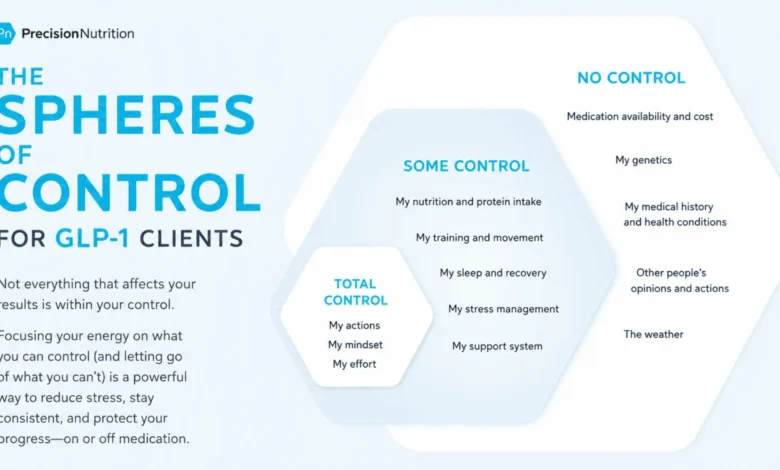
- The Priced-Out: Driven by shifts in health insurance coverage, employment status, or rising out-of-pocket costs, approximately 50 percent of GLP-1 users discontinue the medication within their first year. Dealing with the frustration of systemic healthcare failures, these clients benefit from psychological frameworks that separate socio-economic access issues from personal willpower, redirecting their focus strictly toward controllable variables such as sleep, stress management, and daily physical activity.
Broader Implications and Industry Adaptations
The widespread adoption of GLP-1 medications has fundamentally rewritten the operational playbook for health and fitness institutions. Rather than rendering human coaching obsolete, the pharmacological management of metabolic disease has amplified the need for behavioral specialists. The ultimate value proposition of a modern fitness professional is no longer merely prescribing caloric deficits, but constructing deep behavioral neural pathways—metaphorically described as carving deep wagon trails—that remain resilient long after pharmaceutical intervention ceases.
As the medical establishment increasingly treats obesity as a chronic condition requiring long-term management, the intersection of pharmacotherapy and lifestyle coaching will only deepen. Organizations are responding by developing specialized educational curriculums, such as advanced coaching certifications focused entirely on navigating the complexities of strength, fueling, fitness, recovery, and results for medicated populations. Ultimately, the success of the modern fitness coach lies in recognizing that while drugs can alter appetite, sustainable human health requires enduring behavioral architecture.