UN votes 130-17 to condemn U.S. Cuba embargo as Washington lobbies shift in global support

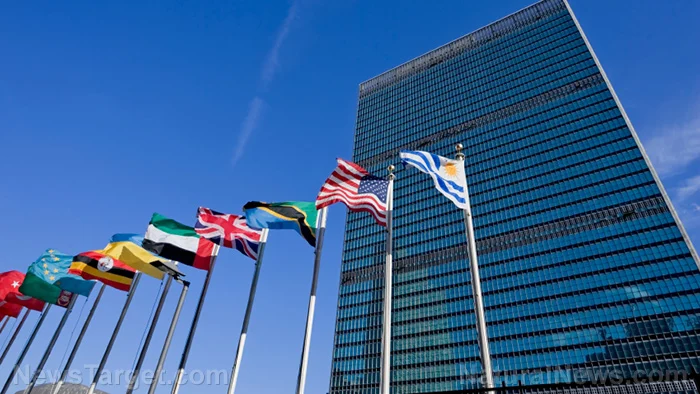
In a stark reflection of the deepening geopolitical rift between Washington and the international community, the United Nations General Assembly voted 130-17 on October 28, 2026, to condemn the long-standing United States embargo against Cuba. While the resolution calling for the end of the blockade passed with a clear majority, the vote tally revealed a strategic pivot in global diplomatic alliances. For the first time in recent history, the Trump administration successfully lobbied a significant number of major economies—including Germany, Italy, and South Korea—to move from their traditional stance of opposition to abstention. Despite this tactical victory for the White House, the overwhelming consensus remains that the 64-year-old economic policy is an impediment to regional stability and a violation of international humanitarian norms.
The session at the UN headquarters in New York was marked by unprecedented acrimony. Beyond the legislative maneuvering, the assembly floor became the stage for a physical confrontation between U.S. and Cuban diplomats, an incident that underscores the volatile state of bilateral relations. As the humanitarian crisis on the island reaches a critical juncture, the annual UN ritual has shifted from a predictable exercise in symbolic diplomacy to a high-stakes arena of power politics.
A Chronology of the Embargo and the 2026 Escalation
The origins of the current impasse are rooted in the Cold War, yet the modern architecture of the embargo was codified into U.S. law through the 1996 Helms-Burton Act. This legislation effectively tied the hands of the executive branch, ensuring that the embargo could only be lifted by an act of Congress, regardless of the president’s political leanings.
The historical timeline of this policy is characterized by brief periods of detente followed by sharp retrenchment:
- 1962: President John F. Kennedy imposes a comprehensive trade embargo against Cuba, citing the island’s alignment with the Soviet Union and the nationalization of American property.
- 1992: The UN General Assembly holds its first vote on the necessity of ending the U.S. economic, commercial, and financial blockade. The resolution passes, beginning a decades-long trend of U.S. isolation on the issue.
- 2016: In a historic shift, the Obama administration abstains from the UN vote for the first time, signaling a move toward normalization.
- 2026 (January): The Trump administration implements a "de facto" fuel blockade, severely restricting the flow of energy resources to the island.
- 2026 (Mid-Year): U.S. military intervention results in the removal of Venezuelan President Nicolas Maduro, a key economic patron of the Cuban government, accelerating the collapse of Havana’s energy infrastructure.
- 2026 (October 28): The UN General Assembly votes 130-17 to condemn the embargo, with 25 abstentions, amidst a backdrop of physical clashes between delegations.
Economic Data and the Humanitarian Toll
The human cost of these policies is increasingly visible in the streets of Havana and across the Cuban provinces. According to data provided by the Cuban government, the total economic losses attributed to the embargo over the past six decades exceed $179 billion. However, the most immediate crisis is not purely fiscal; it is a collapse of basic utility infrastructure.
Following the January 2026 fuel blockade, fuel imports dropped to historic lows. This has manifested in a systemic power crisis, with major metropolitan areas experiencing rolling blackouts that can last for several consecutive days. The lack of fuel has also paralyzed the agricultural and water distribution sectors. Without electricity to power water pumps or transport mechanisms to deliver food to urban centers, the population of 11 million is facing a deepening emergency.
International aid organizations have expressed concern that the "maximum pressure" campaign is disproportionately impacting non-combatant civilians. While the U.S. administration maintains that these measures are intended to target the leadership of the Communist Party of Cuba, the reality on the ground is a crumbling social safety net. Residents like Luis Manuel Cepero, who has lived through the tightening of sanctions, describe a daily existence defined by scarcity, noting that the political posturing at the UN often overlooks the granular, day-to-day suffering of ordinary citizens.
Official Responses and Diplomatic Friction
The floor of the UN General Assembly turned into a theater of confrontation on Tuesday, as verbal exchanges between Cuban and American diplomats escalated into physical shoving. By Wednesday, the situation had deteriorated further. U.S. envoy Mike Waltz announced the expulsion of Cuban First Secretary Richard Tur de la Concepcion, alleging that the diplomat had assaulted an American staffer. In a reciprocal move, Havana lodged a formal complaint with UN Secretary-General Antonio Guterres, characterizing the American actions as a violation of diplomatic protocol and a continuation of an act of "collective punishment."
The U.S. stance, articulated clearly by Waltz, emphasizes that the administration views the Cuban government as a "corrupt dictatorship" that warrants total isolation. The administration views the shifting votes of Germany, Italy, and South Korea not as a sign of failure, but as a strategic success. By persuading these nations to abstain, Washington is attempting to reframe the debate from a moral condemnation of the embargo to a pragmatic critique of the Cuban state.
Cuban Foreign Minister Bruno Rodriguez, however, remained defiant in his address to the General Assembly. "The U.S. government is once again isolated in its attempt to continue strangling the Cuban people," Rodriguez stated. He categorized the embargo as a form of genocide, arguing that the U.S. is weaponizing basic human needs to force political change—a strategy he contends will only result in further suffering for the Cuban populace.
Strategic Implications and the Path Forward
The 2026 UN vote marks a divergence in the way international actors approach the Cuban question. The U.S. is clearly willing to expend significant diplomatic capital to maintain its hardline stance, even at the cost of being on the losing side of a massive multilateral vote. For the Trump administration, the goal is not to win the UN popularity contest, but to fundamentally weaken the Cuban state to the point of collapse or regime transition.
From a geopolitical perspective, the outcome of this vote suggests a fracturing of the consensus that has held since the end of the Cold War. The ability of the U.S. to peel away major G7 and G20 economies into the "abstention" column indicates that Washington’s pressure campaign against regional actors—including the removal of the Maduro government in Venezuela—has created a new reality. Many countries now fear that opposing the United States on the Cuba issue could result in collateral diplomatic or economic fallout.
Yet, for all the political maneuvering, the core dilemma remains unresolved. The Helms-Burton Act creates a rigid legislative framework that precludes a quick fix. As long as the U.S. Congress remains divided and the administration prioritizes a policy of containment, the UN vote will remain an annual, largely symbolic, protest. The lack of a diplomatic bridge between Washington and Havana suggests that the stalemate will persist, with the humanitarian situation in Cuba likely to worsen as the island’s infrastructure continues to buckle under the strain of isolation.
The international community now finds itself in a position of observing a slow-motion collapse. While the UN vote provides a platform for dissent, it lacks the enforcement mechanisms to challenge the U.S. trade policy. Ultimately, the future of the embargo will not be decided in the halls of the United Nations, but by the outcome of the internal struggle within Cuba and the willingness of the American political establishment to reconsider the efficacy of a strategy that has remained fundamentally unchanged for over half a century. As the world watches, the human toll continues to mount, leaving the 11 million citizens of Cuba to bear the brunt of an enduring ideological conflict.