Trucking’s Triple Crisis: Diesel Prices, Regional Scarcity, and the Autonomous Threat

The American freight industry is currently navigating a precarious convergence of economic and technological pressures that threaten the structural integrity of the nation’s supply chain. Industry analysts and independent operators are highlighting three primary vectors of concern: the unprecedented volatility of diesel fuel prices, localized supply shortages resulting from refinery closures, and the accelerated integration of autonomous long-haul transport. As stakeholders contemplate potential labor actions and industry-wide work stoppages, the ripple effects of these challenges are beginning to manifest in the form of increased logistics costs and potential inventory volatility for essential consumer goods.
The Economic Landscape: Diesel Fuel Volatility
The trucking industry serves as the primary artery for the United States economy, with approximately 70 percent of all domestic freight by weight transported by heavy-duty trucks. The rapid escalation of diesel fuel prices represents a significant overhead increase for both independent owner-operators and large-scale logistics firms.
According to data from the Energy Information Administration (EIA), national diesel averages have seen sustained upward pressure throughout 2026. This trend is driven by a combination of global crude market fluctuations and domestic refining capacity constraints. In regions such as the West Coast, specifically California, price points have reached record highs, exceeding $8.00 per gallon. Unlike gasoline, diesel is a critical industrial input; it is not merely a transport fuel but a fundamental component in the cost structure of agriculture, manufacturing, and retail. When fuel prices spike, the "hidden tax" is passed down the value chain, manifesting as higher costs for groceries, construction materials, and household essentials.
Chronology of Refining Constraints
The current fuel crisis is rooted in a multi-year shift in domestic energy infrastructure. The following timeline illustrates the contraction of refining capacity:
- October 2025: Phillips 66 confirms the closure of its Wilmington, California refinery, removing approximately 139,000 barrels per day from the regional supply pool.
- January 2026: Valero Energy announces the closure of its Benicia refinery, citing the financial burden of regulatory compliance and market conditions, despite a reported $1.1 billion loss on the transition.
- October 2026: A critical grid failure at the ExxonMobil refinery in Joliet, Illinois, causes an emergency operational shutdown, impacting supply levels across the Midwest and triggering immediate price adjustments in regional wholesale markets.
These shutdowns were largely precipitated by tightening environmental regulations and shifting mandates, such as California’s Assembly Bill X2-1, which imposed stringent fuel storage and operational requirements. Critics within the industry argue that these policies have outpaced the speed at which alternative energy infrastructure could be scaled, leaving a vacuum in fuel supply that is difficult to fill through existing import channels.
Regional Scarcity and Supply Chain Fragility
Beyond the price at the pump, the industry is confronting a more immediate threat: regional scarcity. Recent events in the Midwest demonstrated how quickly a localized failure—such as the Joliet grid disruption—can destabilize regional fuel availability. When refinery outages occur in quick succession, the logistics of transporting fuel from non-affected regions to the site of the shortage becomes prohibitively expensive and time-consuming.
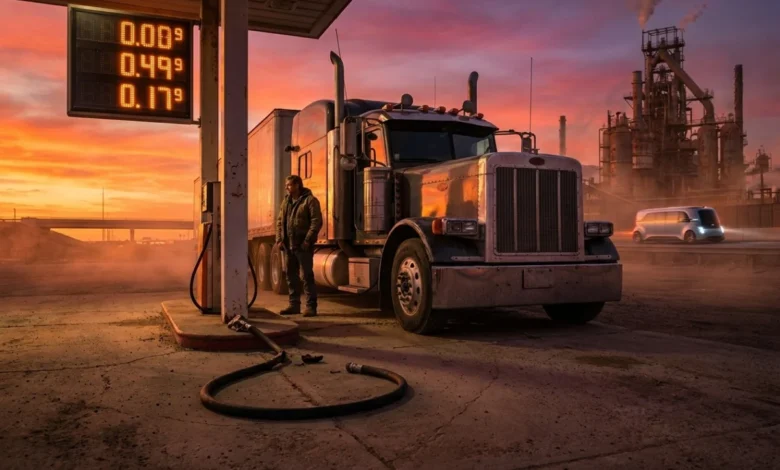
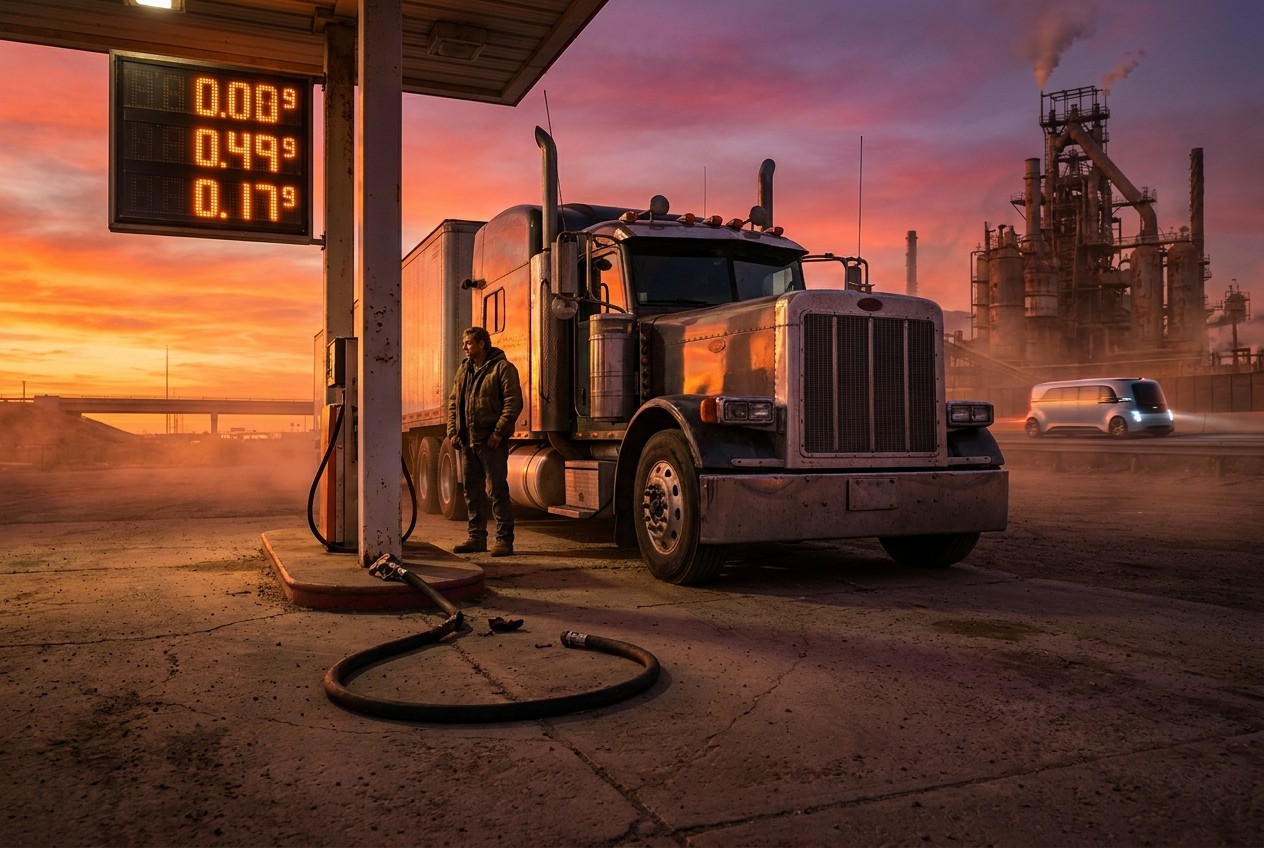
Industry experts have noted that deferred maintenance on aging refinery infrastructure is a contributing factor to these unexpected outages. As facilities are pushed to maximize output to meet demand, the margin for error in maintenance cycles narrows. The resulting "rolling shortages" have led to situations where fuel stations in high-demand areas have effectively run dry, forcing operators to detour or face extended downtime. In some instances, fuel station pricing displays have reached their digital capacity, serving as a de facto signal that supplies are exhausted.
The Technological Pivot: Autonomous Freight
While diesel and fuel scarcity represent cyclical economic challenges, the rise of autonomous trucking represents a structural shift. The deployment of self-driving long-haul vehicles is no longer a speculative venture; major technology firms and traditional automotive manufacturers are currently engaged in active highway testing across the United States.
The implications for the labor market are substantial. Independent owner-operators, who constitute a significant portion of the trucking workforce, face a competitive disadvantage against fleets that can leverage autonomous technology. Proponents of the technology point to the ability of autonomous rigs to operate continuously, potentially bypassing current Hours-of-Service (HOS) regulations that govern human driver rest periods. However, the transition to autonomous fleets requires significant capital expenditure in charging infrastructure and sensor-equipped vehicles, which may favor large corporations over smaller, independent business owners.
Industry and Regulatory Responses
The prospect of an industry-wide protest, often discussed in informal networks among independent drivers, highlights a growing disconnect between the regulatory environment and the realities of the road. While only a minority of the U.S. trucking workforce is unionized, the grievances regarding fuel costs and operational autonomy have created a unique space for cross-industry communication.
Labor advocates and industry associations have called for a reassessment of the energy policies that have impacted refining capacity. Conversely, government agencies emphasize the necessity of the transition toward lower-emission transportation solutions. There is a clear tension between the immediate need for affordable diesel to maintain current supply chains and the long-term policy objective of decarbonizing the transportation sector.
Broader Macroeconomic Implications
The convergence of these factors creates a "perfect storm" for the domestic economy. Because the cost of shipping is a primary driver of inflation, the sustained pressure on trucking firms is likely to keep consumer prices elevated through at least 2027. Businesses that rely on "just-in-time" inventory models are particularly vulnerable to these disruptions.
The shift toward electrification, while potentially insulating the industry from fossil fuel price volatility in the long term, presents its own set of hurdles. The current electricity grid capacity is not yet optimized to support a large-scale transition of the trucking fleet to electric power. As such, the industry is entering a transitional phase characterized by high costs and significant uncertainty.
Conclusion and Strategic Outlook
The trucking industry is at a crossroads where macroeconomic policy, energy security, and technological innovation intersect. For the owner-operator, the immediate focus remains on navigating the price shocks and supply shortages that have defined the current fiscal year. For policymakers, the challenge lies in balancing the need for energy stability with the long-term goals of technological and environmental reform.
As the industry moves forward, the trend toward consolidation appears likely to accelerate. Smaller firms and independent operators will need to explore strategies for operational resilience, such as investing in fuel-efficient technologies, diversifying logistics routes, and potentially pivoting toward specialized freight niches where automation is less viable. The coming months will be critical in determining whether the domestic supply chain can absorb these shocks without experiencing more severe, systemic failures. The resilience of the American economy will, in large part, depend on the ability of the trucking industry to adapt to these compounding pressures while maintaining the flow of goods to the consumer.