Navigating the GLP-1 Landscape: Seven Client Profiles Every Health Coach Must Understand in 2026

The rapid surge of glucagon-like peptide-1 (GLP-1) receptor agonists, beginning with the mass-market introduction of semaglutide in 2017, fundamentally transformed the wellness and fitness coaching industry. Initially perceived as a theoretical challenge or an existential threat to traditional personal training and nutrition counseling, these pharmaceutical interventions have achieved unprecedented ubiquity. By 2026, statistical tracking indicates that over one in ten adults in the United States are actively utilizing a GLP-1 medication. This widespread adoption has shifted industry perspectives away from professional anxiety and toward collaborative integration. Rather than competing with pharmacology, contemporary health and fitness professionals increasingly position themselves within the GLP-1 support ecosystem, recognizing that medication addresses biological appetite regulation while behavioral coaching secures long-term lifestyle foundations.
The evolution of clinical and coaching perspectives over the past decade highlights a clear shift in how fitness professionals interact with pharmaceutical weight management. When semaglutide and similar compounds like tirzepatide first gained mainstream prominence, prescription volumes remained constrained, and the dialogue among coaches was dominated by concerns over job displacement, client skepticism, and the potential bypassing of foundational habits. Today, industry leaders emphasize that successful coaching does not target every individual taking a GLP-1, but rather focuses exclusively on the subset of users who actively seek structured guidance, physiological optimization, and behavioral reinforcement. Drawing from accumulated data across hundreds of thousands of client interactions, experts have categorized the modern GLP-1 demographic into seven distinct behavioral profiles. Each profile demands a tailored coaching strategy based on the client’s current psychological readiness, physiological response, and long-term health trajectory.
Client Type One: The Honeymooner
The first profile encompasses individuals who have recently initiated a GLP-1 regimen and are experiencing immediate, favorable outcomes with minimal side effects and low dosing requirements. Because the pharmacological intervention successfully suppresses appetite without necessitating immediate behavioral overhauls, these clients exhibit very low coaching readiness. They are often satisfied with scale metrics alone and feel little intrinsic motivation to alter exercise or dietary patterns. For fitness professionals, attempting to intervene by highlighting the future risks of unmanaged lifestyle habits—a common pitfall known in motivational interviewing as the "righting reflex"—frequently backfires, creating defensiveness rather than engagement. The optimal coaching approach for this demographic involves genuine celebration of their current progress combined with an open, non-judgmental invitation for future support, effectively establishing a secure baseline for when their needs inevitably shift.
Client Type Two: The Ambivalent Candidate
Representing the psychological friction present before pharmaceutical intervention even begins, the ambivalent candidate is an individual who has been recommended a GLP-1 by a primary care physician yet remains paralyzed by hesitation. Fears regarding permanent dependency, adverse side effects, and personal efficacy frequently plague this group. Furthermore, societal stigma surrounding obesity often introduces moral dimensions to the decision, with clients questioning whether choosing a pharmaceutical aid signifies personal weakness. Because medication prescription falls strictly outside the scope of practice for fitness coaches, professional intervention centers on exploring internal conflict rather than making clinical recommendations. Utilizing structured psychological tools, such as the analysis of the risks of starting versus the risks of remaining status quo, helps clients articulate underlying ambivalence and clarify their readiness to consult further with medical providers.
Client Type Three: The Ready-to-Quitter
Despite favorable initial weight loss metrics, a significant percentage of GLP-1 users experience severe adverse gastrointestinal side effects, including persistent nausea, vomiting, fatigue, and digestive distress. This profile, designated as the ready-to-quitter, often feels isolated, particularly when comparing their difficult physiological adjustment to acquaintances who experience seamless compliance. Clinical data indicates that approximately half of all users report nausea, while a substantial minority experience more severe symptoms. Coaches working with this population must provide depersonalizing education regarding typical pharmacological adjustment periods while operating strictly within their scope of practice. Recommended strategies include encouraging clients to consult prescribing physicians regarding dosage adjustments—as rapid titration frequently exacerbates side effects—and proposing behavioral experiments such as smaller, more frequent nutrient-dense meals to improve tolerability without inducing nutritional deficiencies.

Client Type Four: The Muscle-Loss Risk
While rapid reductions in overall body mass frequently trigger initial enthusiasm, clinical data reveals that up to forty percent of weight lost through unmonitored GLP-1 usage can originate from lean mass, predominantly skeletal muscle tissue. The muscle-loss risk profile typically features sedentary individuals, frequently women from demographics where historical resistance training was absent, who present with preexisting low protein intake habits and minimal physical activity beyond light walking. Because conventional scales fail to differentiate between fat loss and muscle catabolism, coaches must introduce objective assessment tools, such as dual-energy X-ray absorptiometry (DEXA) scans or functional strength metrics, to illuminate invisible physiological risks. Interventions for this group focus on scaling protein density—targeting specific gram thresholds per meal—and establishing progressive, highly achievable resistance training routines tailored to the individual’s current physical capacity.
Client Type Five: The Under-Fueler
In instances where pharmacological appetite suppression exceeds optimal clinical parameters, clients frequently transition into under-fuelers, individuals whose desire to consume food is entirely eliminated. These clients often fail to recognize their severe caloric and protein deficits until prompted, inadvertently risking extreme fatigue, hair loss, and compromised metabolic function. Because severe dietary restriction can occasionally mask or trigger underlying disordered eating patterns, coaches must exercise rigorous caution. When food logs or direct inquiries reveal dangerously low caloric intakes, professionals are tasked with conducting crucial, compassionate conversations centered on physiological safety. For clients willing to engage, establishing a rigid eating schedule based on the clock rather than internal hunger cues becomes essential, while those exhibiting profound resistance or clinical eating disorders must be promptly referred to specialized medical and nutritional practitioners.
Client Type Six: The Graduate
As patients successfully reach their therapeutic targets, an increasing number choose to taper off and discontinue GLP-1 medications. The graduate profile enters this transition facing high vulnerability to weight regain, as appetite regulation mechanisms return to baseline levels. Industry insights emphasize that coming off medication does not represent a definitive endpoint, but rather the commencement of a demanding maintenance phase. Successful long-term outcomes depend entirely on the neural pathways and behavioral habits established while the pharmaceutical intervention was actively blunting hunger signals. Coaches working with graduates must actively temper expectations regarding natural weight fluctuations while reinforcing structural habits—such as consistent protein intake, routine resistance training, and psychological identity shifts—ensuring that established lifestyle modifications persist long after pharmaceutical support ceases.
Client Type Seven: The Priced-Out
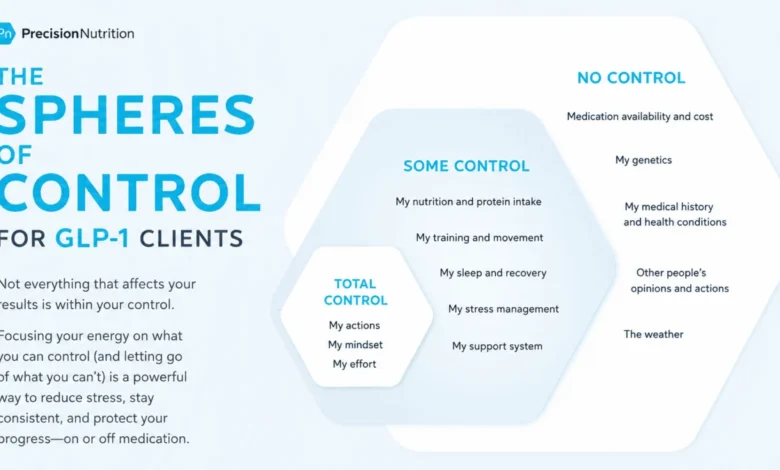
External socioeconomic factors, shifts in health insurance formularies, and employment changes frequently interrupt uninterrupted access to costly pharmaceutical treatments, forcing approximately half of all initial GLP-1 users to discontinue usage within their first year. The priced-out profile experiences significant frustration, anger, and potential self-blame when external systemic barriers abruptly halt an effective medical intervention. Professional coaching for this demographic necessitates a clear psychological reframing: distinguishing between systemic healthcare failures and personal shortcomings. By utilizing control-mapping frameworks, coaches help clients redirect their focus away from unchangeable economic and pharmacological variables and toward controllable lifestyle factors, including sleep quality, physical activity, dietary protein, and stress management, thereby preserving hard-earned health progress in the absence of medication.
Implications and Future Outlook for the Coaching Profession
The maturation of the GLP-1 market by 2026 underscores a permanent shift in the landscape of health and wellness. Pharmaceutical interventions and behavioral coaching are no longer viewed as competing methodologies, but rather as synergistic components of modern chronic disease management. While medical providers oversee pharmacological prescriptions, titration, and clinical safety, certified health and fitness coaches provide the behavioral architecture necessary to preserve lean tissue, establish sustainable dietary routines, and cultivate lasting lifestyle identities. Ultimately, the long-term success of individuals navigating the complex world of GLP-1 therapies relies not solely on the medication itself, but on the depth of the behavioral ruts carved during treatment—ensuring that sustainable physical and mental health endures regardless of pharmaceutical status.