Decoding the Biological Clock: How Dr. Parminder Singh and the Buck Institute Are Rewriting the Science of Aging


At the forefront of modern biogerontology, researchers are increasingly shifting their focus from studying isolated cellular mechanisms to examining how entire biological systems interact over time. Among these trailblazers is Dr. Parminder Singh, a postdoctoral research fellow in Dr. Pankaj Kapahi’s laboratory at the Buck Institute for Research on Aging. Supported by the prestigious Larry H. Hillblom Postdoctoral Fellowship, Dr. Singh’s investigations center on inter-organ communication, cellular senescence, and insulin resistance. His work illuminates the complex dialogue between human organ systems, specifically examining how age-related transitions such as menopause and metabolic stressors like dietary sugar accelerate cellular decline. By breaking down traditional boundaries in endocrinology and metabolism, Dr. Singh’s research aims to pioneer sex-specific therapeutic interventions that could fundamentally alter how society approaches aging and chronic disease.
The Path to Biogerontology: A Chronology of Discovery
Dr. Singh’s scientific trajectory began far away from the laboratories of California, rooted instead in an unexpected academic pivot during his secondary education in India. Initially drawn to the analytical frameworks of physics and mathematics, he nearly bypassed biology entirely. However, intervention from his high school principal, who recognized a natural aptitude for the life sciences, prompted his enrollment in biology as an elective. This foundational nudge redirected his academic focus, culminating in a Bachelor’s and subsequently a PhD from the National Institute of Immunology in India, where he received rigorous training in endocrinology and metabolism.
Following the completion of his doctoral studies, Dr. Singh secured a position at the Buck Institute for Research on Aging, an independent, non-profit biomedical research institution located in Novato, California, dedicated exclusively to extending the healthy lifespan of humans. Upon joining Dr. Pankaj Kapahi’s laboratory, Dr. Singh expanded his research scope to investigate systemic metabolic communications. His academic productivity and innovative investigative strategies were formally recognized when he received the Larry H. Hillblom Postdoctoral Fellowship, an award dedicated to supporting exceptional emerging researchers in aging and metabolic disorders. Today, his daily work merges rigorous experimental science with a passion for biological storytelling, translating intricate molecular pathways into accessible insights for the scientific community and the public alike.

Mapping the Dialogue Between Organ Systems
Historically, biomedical research has favored a reductionist approach, analyzing individual organs—such as the liver, brain, or pancreas—in isolation. While this methodology has yielded significant pharmacological breakthroughs, it fails to capture the holistic nature of mammalian physiology. Organ systems do not function as standalone entities; rather, they constantly communicate via biochemical signals, including hormones, cytokines, neural impulses, and metabolic byproducts.
Dr. Singh’s research addresses the breakdown of this systemic network during the aging process. Disruptions in inter-organ communication are now recognized as a hallmark of biological aging, contributing to chronic systemic inflammation, metabolic dysfunction, and tissue degeneration. Crucially, Dr. Singh emphasizes that these communication pathways operate differently across biological sexes. Hormonal transitions, such as those occurring during menopause, drastically alter systemic signaling networks. By ignoring these sex-specific variables, conventional biomedical models have historically overlooked critical factors underlying why men and women experience age-related conditions—such as cardiovascular disease, metabolic syndrome, and neurodegeneration—differently.
Unpacking Menopause, Ovarian Signals, and Metabolic Stress
A central pillar of Dr. Singh’s current investigation involves evaluating the systemic repercussions of reproductive senescence, specifically focusing on the loss of ovarian function. Menopause marks a natural biological transition characterized by the cessation of ovarian follicular activity and a consequential decline in systemic sex steroid hormones, including estrogen and progesterone. While traditionally viewed through the narrow lens of reproductive health, ovaries act as active endocrine glands that constantly signal peripheral tissues, particularly the central nervous system.

Beyond natural menopause, a significant subset of the female population undergoes surgical menopause via bilateral oophorectomy—the surgical removal of both ovaries. Epidemiological data indicates that approximately 300,000 women worldwide undergo this procedure annually. Unlike natural menopause, which typically progresses over several years, surgical oophorectomy induces an abrupt termination of ovarian signaling, presenting a distinct physiological shock to the organism.
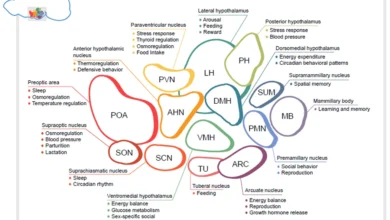
To model and evaluate these dynamics, Dr. Singh utilizes laboratory models involving bilateral ovariectomy (OVX). Experimental observations from this model indicate that the hypothalamus—a vital diencephalic structure responsible for regulating thermoregulation, circadian rhythms, appetite, energy homeostasis, and endocrine activity—is exceptionally sensitive to the loss of ovarian inputs. When ovarian signaling ceases, specific hypothalamic neuronal populations exhibit functional declines, while adjacent glial support cells display heightened reactivity. These cellular alterations provide a mechanistic framework for understanding why individuals frequently report sleep disturbances, cognitive fog, fatigue, and metabolic dysregulation following the loss of ovarian function.
The Metabolic Burden of Advanced Glycation End Products
In parallel with his work on reproductive aging, Dr. Singh investigates the biochemical consequences of chronic metabolic stress, specifically examining how excess dietary sugar consumption accelerates cellular deterioration. When individuals consume high quantities of refined sugars, or experience impaired glucose metabolism over extended periods, endogenous molecules undergo non-enzymatic glycation. This biochemical reaction between reducing sugars and free amino groups on proteins, lipids, or nucleic acids culminates in the formation of advanced glycation end products, commonly referred to as AGEs.
The accumulation of AGEs wreaks structural and functional havoc across multiple organ systems. These aberrant molecules bind to specific cell-surface receptors, such as RAGE (Receptor for Advanced Glycation End products), triggering intracellular cascades that amplify oxidative stress, promote chronic low-grade inflammation, and compromise vascular elasticity. Over time, tissue glycation contributes to arterial stiffening, diabetic complications, nephropathy, retinopathy, and cognitive decline.

Significantly, Dr. Singh’s research bridges these two seemingly disparate fields: reproductive aging and metabolic dysfunction. Emerging evidence suggests that the hormonal shifts accompanying menopause diminish the body’s metabolic resilience, rendering tissues more susceptible to the damaging cascades of glycation. Consequently, the physiological toll of excess dietary sugar may amplify exponentially post-menopause, accelerating the biological aging clock.
Implications for Preventative Medicine and Therapeutics
The implications of Dr. Singh’s research extend far beyond academic theory, offering a paradigm shift toward preventative and personalized medicine. Age-associated pathologies rarely materialize overnight; rather, they are the downstream consequences of decades-long cellular dysfunction, signaling failures, and metabolic insults.
By identifying how specific life transitions—such as menopause—interact with metabolic stressors to impair brain and systemic health early in the disease timeline, Dr. Singh’s work paves the way for preemptive interventions. Rather than waiting to treat manifest pathology in late life, future medical strategies could deploy targeted therapeutics or lifestyle interventions to preserve intercellular communication networks before irreversible tissue damage occurs. Furthermore, by centering sex-specific biology in preclinical models, this research underscores the urgent necessity of developing precision therapeutics tailored to the distinct physiological profiles of men and women.
The Horizon of Biogerontology: AI and High-Throughput Innovation

As the field of biogerontology looks toward the next decade, the integration of advanced technologies promises to accelerate the pace of discovery exponentially. Modern researchers are no longer constrained by the slow, linear process of testing single hypotheses in isolation. The incorporation of artificial intelligence, machine learning algorithms, and high-throughput screening platforms enables scientists to analyze massive datasets, map complex multi-organ signaling networks, and evaluate thousands of pharmacological compounds simultaneously.
Dr. Singh remains optimistic about this technological evolution, viewing it as a catalyst for translating fundamental biological insights into actionable clinical realities. By harnessing these computational and laboratory advancements, researchers aim to isolate novel therapeutic targets that can mitigate cellular senescence, restore metabolic homeostasis, and extend human healthspan. Ultimately, the work being conducted at the Buck Institute by investigators like Dr. Singh serves as a vital bridge between molecular biology and human longevity, offering tangible hope for a healthier, more resilient aging population.
Related posts: