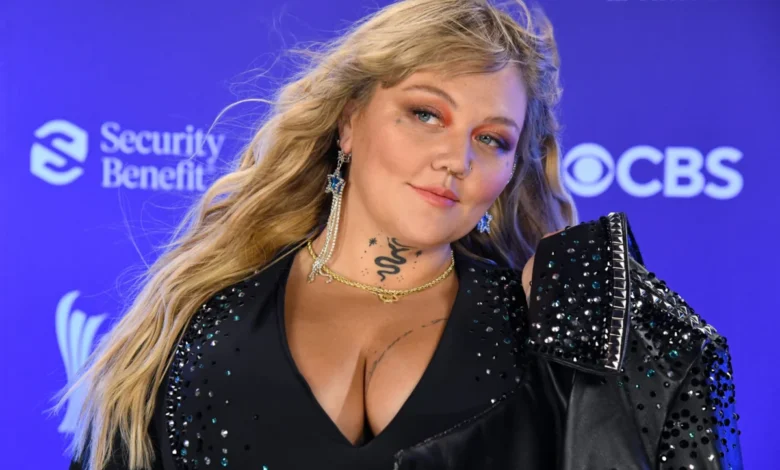
At 37, Grammy-nominated singer Elle King is navigating a profound period of self-discovery, marked by her recent public acknowledgment of an autism diagnosis. This revelation, shared on Instagram in May, has prompted King to offer her fans a deeper insight into how understanding her neurodivergent identity is reshaping her perspective on life and mental health. The journey to this diagnosis, while bringing clarity, unfolded under somewhat unexpected circumstances, highlighting the often circuitous paths to self-understanding.
The catalyst for King’s introspection, and ultimately her diagnosis, was her participation in the new Fox reality competition series, Nation’s Dumbest. Leading up to the filming of the show, King admitted to experiencing a degree of anxiety, stemming from a concern that she might inadvertently live up to the program’s title. To assuage these nerves, she undertook two online IQ tests, which not only confirmed her above-average intelligence with a score of 132 but also inadvertently set the stage for a more significant personal revelation. The self-reflection spurred by her participation in the show, combined with the subsequent findings, proved to be a pivotal moment.
"I love games. I love game shows. I’m extremely competitive, and I love puzzles and everything," King shared with Us Weekly. "I actually found out right after the show that I’m autistic, and so I was like, ‘Everything makes so much sense now.’ But I didn’t even know.” This sentiment encapsulates the experience of many individuals who receive an autism diagnosis later in life, where previously unexplained traits and behaviors suddenly coalesce into a coherent understanding of their neurotype.
The Nuances of Adult Autism Diagnosis, Particularly for Women
King’s experience of living for decades without a formal diagnosis is not an anomaly, especially among women. Autism Spectrum Disorder (ASD) is a lifelong neurodevelopmental condition that impacts brain development, influencing social communication, interaction, and sensory processing. The "spectrum" nature of ASD means that its presentation varies significantly from one individual to another, leading to a wide range of experiences and challenges.
While ASD is typically identified in early childhood, a significant number of women are either misdiagnosed or their autism goes entirely unnoticed during their formative years. This diagnostic gap is largely attributed to historical diagnostic criteria that were predominantly based on the presentation of ASD in young boys. Consequently, these benchmarks often failed to capture the subtler or different ways autism can manifest in females. Current data from the Centers for Disease Control and Prevention (CDC) indicates that boys are approximately four times more likely to be diagnosed with autism than girls.
This disparity is further exacerbated by a phenomenon known as "masking." Girls and women on the autism spectrum often learn from a young age to internalize their challenges and consciously mimic social cues to blend in with their neurotypical peers. This learned behavior, while a survival mechanism, can make their autistic traits less apparent to observers, including medical professionals. When seeking help, these individuals may present with overlapping difficulties such as anxiety, panic disorders, or depression, which can overshadow or misdirect the diagnostic process away from an underlying autistic neurotype.

A Growing Trend of Public Figures Sharing Their Journeys
Elle King is not alone in her candidness about an adult autism diagnosis. The music industry, in particular, has seen other prominent figures come forward. R&B singer SZA, for instance, recently confirmed her own ASD diagnosis on social media, reflecting on how it influences her remarkable pattern recognition abilities, a common characteristic among autistic individuals. This growing trend of public figures sharing their experiences is crucial in raising awareness, destigmatizing neurodivergence, and encouraging others to seek understanding and support.
The Impact of Diagnosis on King’s Life and Career
For King, who is also a mother of two, receiving this diagnosis has provided a valuable framework for prioritizing her well-being and re-evaluating her approach to navigating the world. The clarity gained has allowed her to establish new boundaries and cultivate environments that are conducive to her mental and emotional health.
"I’ve had a lot of not my proudest moments, and so especially with my autism diagnosis, I am putting new kinds of safety barricades," King explained. "And I just want to be around people that I feel safe around, and I just want to do things that bring me joy.” This statement underscores the profound impact of self-understanding on personal agency and the ability to curate a life that aligns with one’s authentic needs.
In her initial Instagram post announcing her diagnosis, King shared a snippet of an unreleased song. The lyrics conveyed a sense of feeling misunderstood and the burden of past setbacks. This artistic expression serves as a testament to her ongoing process of integrating her newfound self-awareness into her creative output and personal life. Moving forward, she is focused on leveraging this understanding to achieve a more harmonious balance between her demanding music career and her home life.
Embracing Presence and Joy in the Next Chapter
"I keep telling myself whatever this next chapter is, I really want to be present and enjoy it," King stated. "That’s what I’m trying to do.” This aspiration for presence and enjoyment reflects a conscious effort to embrace the present moment and find fulfillment in her experiences, unburdened by the need to mask or conform.
King’s willingness to share her personal journey with her audience serves as a powerful reminder that the pursuit of self-knowledge has no age limit. It is never too late to advocate for one’s needs, to shed the performative layers of masking, and to establish the necessary boundaries that enable personal growth and thriving. Her transparency contributes to a broader cultural conversation about neurodiversity, encouraging a more inclusive and understanding society where individuals of all neurotypes feel empowered to live authentically.
The implications of King’s openness extend beyond her personal narrative. By speaking out, she contributes to a growing body of evidence and personal accounts that highlight the prevalence of undiagnosed autism in adults, particularly women. This can encourage more individuals to explore their own experiences and seek professional assessment if they suspect they might be on the autism spectrum. Furthermore, her proactive approach to setting boundaries and prioritizing joy offers a model for others navigating similar journeys of self-discovery and mental health advocacy. The integration of her artistic expression with her personal revelations suggests a powerful synergy, where her music can become a conduit for further connection and understanding, both for herself and her listeners. As Elle King steps into this new phase of her life, her journey offers a beacon of hope and validation for many, emphasizing the transformative power of self-acceptance and authentic living.