The Role of Quercetin in Mitigating Cardiovascular Risk and Enhancing Global Heart Health Outcomes

The global medical community has reached a critical juncture in the fight against heart disease, as evidenced by a comprehensive report published in the Journal of the American College of Cardiology in September 2025. This landmark study, which analyzed health data from 204 countries and territories, revealed a sobering reality: cardiovascular disease (CVD) accounted for one in every three deaths worldwide in 2023. However, the report also offered a roadmap for prevention, noting that 79.6% of the total cardiovascular disease burden is directly attributable to modifiable risk factors. Among these, high blood pressure, elevated blood glucose, poor dietary habits, and chronic systemic inflammation emerged as the primary drivers of mortality. In response to these findings, researchers are increasingly focusing on the therapeutic potential of quercetin, a potent plant-derived flavonoid that addresses these specific risk factors through a multi-targeted biological approach.
The Growing Global Challenge of Cardiovascular Disease
The 2025 report highlights a shifting landscape in global health. While infectious diseases dominated much of the 20th century, the 21st century has been characterized by the rise of non-communicable diseases, with CVD at the forefront. The data suggests that despite advances in surgical procedures and pharmaceutical interventions, the sheer volume of cases is overwhelming healthcare infrastructures. The report emphasizes that the "epidemic" of heart disease is not an inevitability of aging but rather a consequence of lifestyle and environmental factors that trigger metabolic dysfunction.
Chronic inflammation and oxidative stress have been identified as the "silent" precursors to most cardiac events. When the body is in a state of perpetual low-grade inflammation, the delicate lining of the blood vessels—the endothelium—becomes damaged. This damage facilitates the accumulation of plaque, leading to atherosclerosis, heart attacks, and strokes. It is within this context that quercetin has emerged as a subject of intense scientific scrutiny, offering a natural means of interrupting the cycle of vascular decay.
Quercetin: A Biochemical Profile of a Super-Flavonoid
Quercetin is a polyphenolic flavonoid found in high concentrations in a variety of plant-based foods. Chemically, it is known for its ability to donate electrons and neutralize free radicals, making it one of the most effective antioxidants found in nature. Historically, quercetin has been used in traditional medicine for its anti-inflammatory and anti-histamine properties, but modern clinical trials have now quantified its specific impact on the human cardiovascular system.
A meta-analysis of 39 population-wide studies has established a consistent correlation between high flavonoid intake and a significant reduction in cardiovascular risk. Specifically, individuals with the highest consumption of quercetin-rich foods showed a marked decrease in the incidence of coronary heart disease. Unlike synthetic drugs that often target a single enzyme or receptor, quercetin operates across multiple pathways, influencing gene expression, protein signaling, and cellular metabolism simultaneously.
Clinical Evidence: Impact on Blood Pressure and Lipid Profiles
One of the most compelling arguments for the use of quercetin in cardiovascular care comes from randomized controlled trials (RCTs). Hypertension, or high blood pressure, is often called the "silent killer" because it places constant strain on the heart and arteries without presenting obvious symptoms. A meta-analysis of multiple RCTs confirmed that quercetin supplementation leads to significant reductions in both systolic and diastolic blood pressure.
The efficacy of the compound was further demonstrated in a separate randomized, placebo-controlled crossover trial involving overweight adults who exhibited multiple cardiovascular risk factors. Participants were given a daily dose of 150 mg of quercetin. The results were definitive: the group experienced meaningful reductions in systolic blood pressure and a decrease in oxidized low-density lipoprotein (LDL) cholesterol.
LDL cholesterol is often labeled "bad" cholesterol, but the real danger lies in its oxidation. When LDL particles become oxidized, they are more likely to be trapped in the arterial walls, triggering an immune response that leads to plaque formation. Quercetin acts as a shield, blocking this oxidative process. Furthermore, extended studies lasting more than eight weeks have shown that quercetin can help rebalance lipid profiles by lowering triglycerides and increasing high-density lipoprotein (HDL), or "good" cholesterol, which helps remove excess cholesterol from the bloodstream.
Mechanisms of Action: Beyond Surface-Level Benefits
To understand why quercetin is so effective, one must look at its mechanisms of action at the molecular level. The compound targets several key biological markers:
Inhibition of NF-kB and C-Reactive Protein
Quercetin serves as a powerful anti-inflammatory agent by inhibiting NF-kB (nuclear factor kappa-light-chain-enhancer of activated B cells). NF-kB is a protein complex that acts as a "master switch" for inflammation. When activated, it triggers the production of pro-inflammatory cytokines that can damage heart tissue and blood vessels. By keeping this switch in the "off" position, quercetin reduces the levels of C-reactive protein (CRP), a clinical marker used by physicians to predict the risk of heart attack and stroke.
Endothelial Function and Nitric Oxide
The health of the endothelium—the thin layer of cells lining the heart and blood vessels—is a primary determinant of vascular health. A healthy endothelium produces nitric oxide, a gas that helps blood vessels relax and dilate, ensuring smooth blood flow. Quercetin supports endothelial function by protecting these cells from oxidative damage and enhancing the bioavailability of nitric oxide. This not only helps regulate blood pressure but also prevents the "stickiness" of blood cells that can lead to dangerous clots.
Activation of the AMPK Pathway
Perhaps most importantly for metabolic health, quercetin activates AMP-activated protein kinase (AMPK). Often referred to as the body’s "metabolic master switch," AMPK regulates how the body uses energy. By activating this pathway, quercetin improves insulin sensitivity and helps the body manage blood glucose levels more effectively. This is particularly crucial given that the 2025 JACC report identified elevated blood glucose as a primary driver of the global CVD burden.
Chronology of Research and Development
The journey of quercetin from a common plant pigment to a recognized cardioprotective agent has spanned several decades.
- 1990s: Early observational studies in Europe, most notably the "Zutphen Elderly Study," began to link high dietary intake of flavonoids with lower rates of stroke and heart disease.
- 2000s-2010s: Researchers began moving from observation to intervention, conducting small-scale human trials to see if concentrated quercetin supplements could replicate the benefits seen in diet-based studies.
- 2020-2024: Large-scale meta-analyses were conducted, synthesizing data from thousands of participants. These studies solidified the evidence that quercetin could reliably lower blood pressure and improve lipid profiles.
- 2025: The Journal of the American College of Cardiology report provided the global context, framing modifiable risk factors as the primary target for future healthcare strategies, thereby elevating the importance of compounds like quercetin.
Dietary Sources and the Bioavailability Challenge
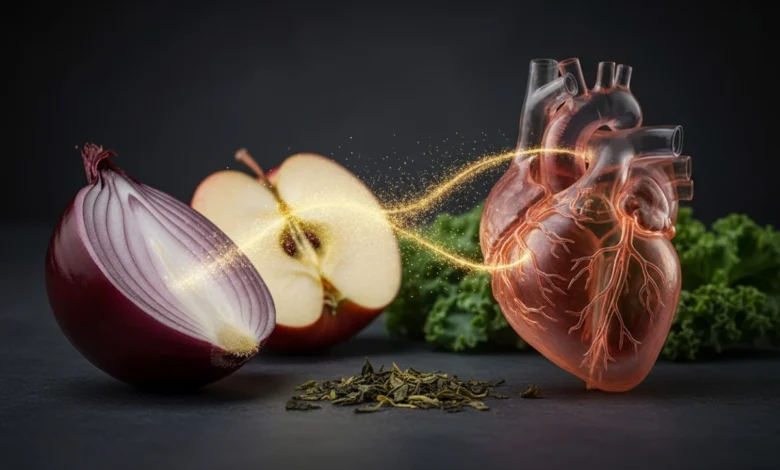
While quercetin is available in supplement form, it is widely present in a variety of common foods. Nutritional research identifies red onions as having some of the highest concentrations of the compound. Other significant sources include capers, red apples (specifically the skin), kale, broccoli, berries, and green tea.
However, the way these foods are prepared significantly impacts their health benefits. Cooking, particularly boiling, can leach quercetin out of vegetables. Nutritionists recommend consuming onions raw or lightly sautéed and eating apples with their skins intact to maximize intake.
A critical factor in quercetin’s effectiveness is its bioavailability—how much of the compound actually enters the bloodstream. Quercetin is fat-soluble, meaning it is absorbed much more efficiently when consumed with dietary fats. This finding has led to the promotion of "heart-healthy" food combinations, such as a salad featuring raw red onions and apples dressed with extra-virgin olive oil. Pairing quercetin-rich foods with healthy fats like avocados or eggs can significantly enhance the body’s ability to utilize the compound.
Implications for Future Medical Practice
The findings regarding quercetin and the 2025 JACC report suggest a necessary shift in how cardiovascular disease is managed. Conventional cardiology has historically relied on a "reactive" model—treating symptoms like high blood pressure or high cholesterol with pharmaceutical monotherapies after they have already reached dangerous levels.
In contrast, the "proactive" model focuses on addressing the underlying oxidative stress and metabolic dysfunction years before they manifest as disease. Medical experts suggest that integrating quercetin and other flavonoids into a broader preventive strategy could alleviate the burden on healthcare systems. This approach does not necessarily replace pharmaceuticals but serves as a foundational layer of protection that addresses multiple pathways of disease simultaneously.
While the scientific community remains cautious, noting that supplements should not be a substitute for a balanced diet and exercise, the evidence for quercetin is becoming too significant to ignore. The compound’s ability to target blood pressure, inflammation, and glucose regulation makes it a unique tool in the effort to reduce the nearly 80% of cardiovascular disease that is currently deemed preventable.
Conclusion: A Science-Supported Approach to Heart Health
The data from the 2025 Journal of the American College of Cardiology report serves as a wake-up call for global health authorities. With one-third of global deaths linked to cardiovascular issues, the need for accessible, effective, and low-risk interventions is paramount. Quercetin, through its documented effects on systemic inflammation, endothelial health, and lipid oxidation, represents a vital component of this new preventive frontier.
By leveraging the multi-pathway benefits of this plant compound—whether through intentional dietary choices or high-quality supplementation—individuals can take a science-supported step toward mitigating their own cardiovascular risk. As research continues to evolve, the integration of such food-based compounds into standard medical advice may prove to be one of the most effective strategies in reversing the global trend of heart disease.