Rewriting the Paradigm of Aging: Dr. Chaska Walton and the Quest to Engineer Living Cures for Alzheimer’s Disease

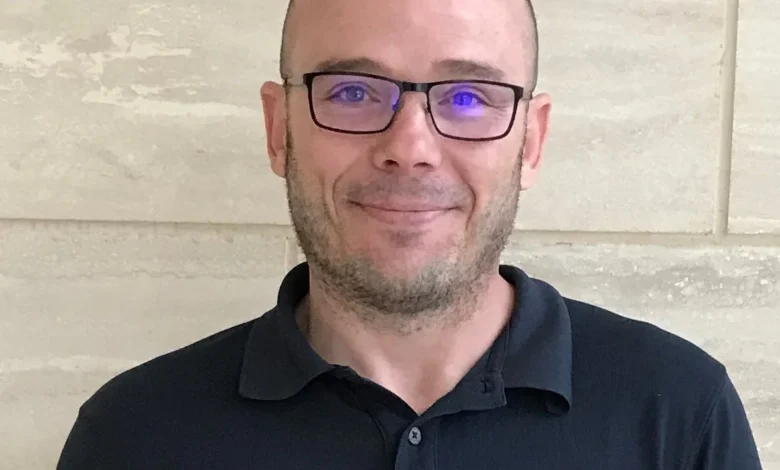
The pursuit of understanding human longevity and neurodegenerative disease has entered a transformative era, driven by brilliant minds working at the intersection of molecular biology, synthetic engineering, and translational medicine. Among these pioneers is Dr. Chaska Walton, a prominent researcher in the laboratory of Dr. Julie Andersen at the prestigious Buck Institute for Research on Aging. Recently, Dr. Walton was named a recipient of a highly competitive $2.4 million NIH Transformative Research Award from the National Institutes of Health. This distinction places him among an elite group of scientists, as the NIH awarded only nine such grants nationwide during this funding cycle. This financial backing aims to accelerate Dr. Walton’s groundbreaking work on the development of smart delivery systems designed to simultaneously treat the multiple, overlapping pathologies characteristic of Alzheimer’s disease.
An International Scientific Journey
Dr. Walton’s path to the forefront of modern geroscience is as multidisciplinary as it is international. His academic career began with undergraduate studies in psychology and neuroscience at the Autonomous University of Barcelona. Driven by a profound curiosity about the human brain, Dr. Walton subsequently pursued doctoral studies in molecular bioscience through a collaborative program between the Spanish National Research Council (CSIC) and the Autonomous University of Madrid, conducting rigorous research at the renowned Cajal Institute.
During his doctoral work in Madrid, Dr. Walton made significant waves in fundamental neuroscience by challenging long-standing biological dogma. He successfully demonstrated that mature, fully differentiated neurons can re-enter the cell cycle—a discovery inspired in part by the foundational visions of Santiago Ramón y Cajal, who historically posited that the science of the future would eventually overturn even the most rigid historical scientific laws.
Carrying this rebellious, boundary-pushing ethos forward, Dr. Walton transitioned to the Buck Institute in California. Here, his focus shifted from exploring the fundamental mechanisms of neuronal vulnerability and aging to engineering synthetic, living therapies for neurodegenerative disorders. Today, his laboratory sits at the crossroads of neuroscience and synthetic biology, specializing in programmable technologies such as chimeric antigen receptor regulatory T cells (CAR-Tregs) and smart-cell delivery platforms. Dr. Walton operates under the core philosophy that neurodegeneration is not an inevitable, immutable consequence of biological aging, but rather a dynamic cellular process that can be thoroughly interrogated, synthetically engineered, and ultimately corrected.
The Philosophy of Editable Biology

At the heart of Dr. Walton’s scientific outlook is a profound perspective on the nature of human biology. When asked what first drew him to the field and what sustains his motivation, Dr. Walton emphasizes that human beings are, at a fundamental level, editable code.
"Some argue that we cannot edit ourselves, but that misses the point," Dr. Walton explains. "It is not about whether we can do something today. In the Stone Age, humans could not fly, yet flight was never forbidden by physics. The limitation was technological, not fundamental. Likewise, biology does not forbid rewriting ourselves. We are editable code. It did not have to be that way, but it is. Whether we possess the tools today is irrelevant to what is possible in principle. One day we will have the tools. I can guarantee that."
This perspective fuels an ambitious research agenda. Dr. Walton envisions a future where scientists routinely design synthetic proteins that unassisted evolution would never naturally produce, expressing them within human cells to generate novel cell types with unprecedented functions, duplicate biological structures, and construct entirely new organs. By rejecting the notion of biological limitations, his team approaches complex health challenges with a blank slate, operating under the guiding premise that biology is malleable code waiting to be optimized.
Redefining the Treatment of Complex Pathology
The central problem driving Dr. Walton’s current research is one of the most stubborn bottlenecks in modern pharmacology: the multifaceted nature of Alzheimer’s disease and the reductionist approach traditionally taken by clinical medicine.
In popular science fiction, microscopic nanobots patrol the human bloodstream, acting as miniature physicians that independently locate and repair damaged tissue. Dr. Walton’s lab is effectively bringing this concept into reality, substituting mechanical nanorobots with living, engineered immune cells. These specialized cells are programmed to patrol the body, autonomously detect specific pathological signatures unique to Alzheimer’s disease, and synthesize and release targeted therapeutic drugs precisely where and when they are needed.
To illustrate why this paradigm shift is desperately needed, Dr. Walton uses an intuitive mechanical analogy.
"Think of a complex disease like a car," he notes. "Say the disease starts with a flat tire. We keep driving the car with the flat tire, and this affects the wheel itself, which is grinding against the asphalt. Now the wheel is damaged, and the shaft holding the wheel is strained. The shaft breaks, the car grinds against the road, leaks oil, and ultimately damages the engine. The approach of modern medicine is to fix one of those things only. We either fix the flat tire, or the wheel, or the shaft, or the engine. We never fix all of them at the same time. The crazy thing is that we expect the car to work by fixing just one thing."
This mechanical failure mirrors the clinical reality of Alzheimer’s disease research. Alzheimer’s is not driven by a single biological failure; rather, it presents multiple interconnected pathologies, including toxic amyloid-beta and tau protein aggregates, chronic neuroinflammation, hyperactive reactive microglia, and progressive synapse dysfunction. Historically, clinical trials and pharmaceutical interventions have overwhelmingly focused on tackling just one of these pathological hallmarks in isolation—such as clearing amyloid plaques while ignoring neuroinflammation or tau pathology.
Despite this fragmented approach, the medical establishment has routinely expected to cure a complex, multi-systemic disease like Alzheimer’s. Dr. Walton stresses that this discrepancy is not merely rhetorical, but a systemic limitation in how modern biomedical research has traditionally been conceptualized and funded.
The Promise of Smart-Cell Delivery Platforms
Dr. Walton’s NIH-funded project directly targets this systemic flaw by engineering biological systems capable of addressing multiple components of a pathology simultaneously. By designing living immune cells to act in synchronized concert—much like the natural immune system—the therapeutic platform can deliver diverse pharmaceutical compounds with microscale precision. Crucially, these engineered cells are programmed with feedback loops to halt drug production once the localized pathology subsides, preventing over-treatment and reducing potential adverse side effects.
The implications of this research extend far beyond Alzheimer’s disease. If successful, programmable, multi-payload living therapies could rewrite the therapeutic playbooks for a wide array of chronic, multi-factorial conditions that have long been classified as incurable. By transforming how medicine addresses complexity, the work conducted in Dr. Walton’s lab at the Buck Institute paves the way for an era where complex diseases are systematically dismantled, engineered, and resolved.
Related posts: