The Cheapest Food You’ll Ever See: Why I Believe a Global Food Shock Is Coming by 2027

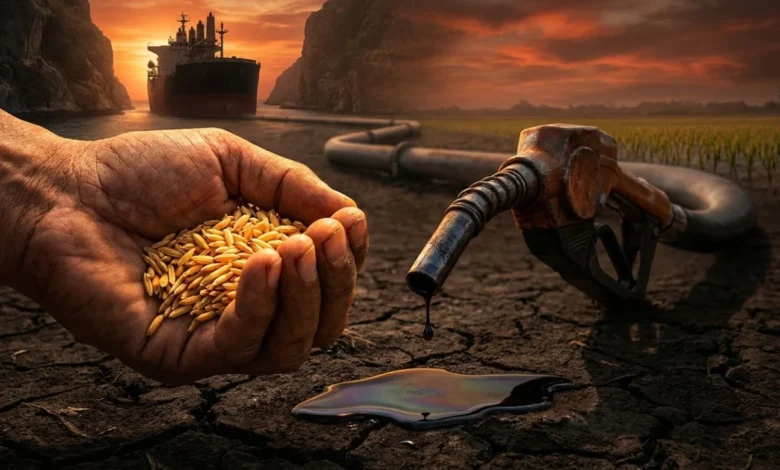
The global agricultural landscape is currently undergoing a structural transformation that threatens to redefine food security for the remainder of the decade. Supply chain analysts, commodity traders, and geopolitical observers are increasingly converging on a sobering projection: the period of relative price stability and product abundance that characterized the post-2010 era is reaching a definitive conclusion. As logistical costs for essential goods climb and the fundamental inputs for modern farming—specifically nitrogen-based fertilizers and diesel—face severe supply constraints, the global economy is bracing for a multi-year inflationary cycle that experts argue will likely peak in intensity by 2027.
The Mechanics of Supply Chain Contraction
The current inflationary pressures in the food sector are not merely a byproduct of lingering post-pandemic adjustments; they are the result of a compounding series of systemic failures. Recent data from wholesale distributors indicates a significant tightening of available inventory. In sectors such as shelf-stable commodities and freeze-dried nutrition, wholesalers are reporting not only price hikes ranging from 30% to 50% per unit but also a drastic reduction in volume availability.
This scarcity is largely attributed to the degradation of global trade logistics. The shipping industry, which relies heavily on consistent and affordable diesel prices, is grappling with a refining squeeze. The International Energy Agency (IEA) has noted that disruptions to refinery output, exacerbated by geopolitical instability in the Persian Gulf and Eastern Europe, have created a bottleneck. Because diesel is the primary fuel for the entire agricultural lifecycle—from heavy machinery in the fields to the long-haul trucking and international shipping required to move harvest to consumer markets—any increase in fuel costs is immediately passed through the supply chain, compounding at every step from the farm gate to the retail shelf.
Chronology of the Approaching Crisis
The timeline for this projected food shock began in earnest following the onset of major geopolitical conflicts in 2022, which disrupted the flow of natural gas, a primary feedstock for synthetic fertilizers. By 2024, the "Five Ws" identified by financial analysts—War, Weather, Warehousing, Water, and Waste—began to exert downward pressure on crop yields.
- 2022-2023: Initial spikes in energy prices forced a shift in global fertilizer markets, causing many smaller agricultural operations to reduce planting densities due to prohibitively high input costs.
- 2024: Institutional reports from firms like JPMorgan and UBS began characterizing food security as a national security issue, highlighting that the inflationary trend was becoming "structurally higher" than the historical 2.5% norm.
- 2025-2026: The persistence of conflicts near critical maritime chokepoints, particularly the Strait of Hormuz, has restricted the transit of petrochemicals necessary for both fuel and soil nutrient production.
- 2027 (Projected): Analysts suggest this year will mark the point where depletion of global grain reserves and the exhaustion of strategic stockpiles converge with continued logistical bottlenecks, leading to a potential peak in food price volatility.
Fertilizer and the Fragility of Modern Agriculture
The most significant vulnerability in modern industrial agriculture is its reliance on synthetic nitrogen fertilizer. The process of manufacturing these fertilizers requires significant volumes of natural gas. As global energy markets remain fractured, the price of fertilizer has become volatile, directly impacting the ability of farmers in developing nations to sustain crop yields.
According to agricultural economists, subsistence farmers in regions such as Sub-Saharan Africa and Southeast Asia lack the hedging capabilities of large-scale agribusinesses. When fertilizer prices rise, these farmers are forced to decrease usage or skip application cycles entirely. This leads to an immediate and measurable drop in caloric output per acre. In a globalized food system where the margin between supply and demand is historically thin, a reduction in yield by even 5% to 10% in major breadbasket regions can trigger a 25% to 50% increase in global market prices. Current projections suggest that if current energy constraints persist, we may witness a global decline in harvest efficiency that could affect the food supply for upwards of a billion people.
Institutional Responses and Market Analysis
Financial institutions have shifted their outlook on food inflation from a transitory concern to a permanent structural shift. UBS analysts have recently noted that investors should expect "structurally higher" food prices for the foreseeable future. The rationale behind this involves the "compounding storm" of climate-driven weather events, which have hindered harvests in the American Midwest and South America, combined with the loss of agricultural infrastructure in conflict zones.
In response to the tightening fuel market, some domestic governments are exploring emergency measures. Discussions regarding the use of the Defense Production Act (or its international equivalents) to prioritize refining capacity for diesel reflect the severity of the situation. However, analysts warn that state intervention is limited in its efficacy; while government decrees can prioritize fuel for immediate transit, they cannot replace the lost capacity of refineries damaged by conflict, nor can they magically restore soil fertility in the absence of affordable nitrogen.
Implications for Consumer Markets
For the average consumer, the most immediate consequence of this structural failure is a shift in retail behavior. We are already observing a move away from "full-aisle" availability toward "missing category" patterns. As inventory levels for specific raw materials collapse—a phenomenon recently documented by an 86% reduction in certain wholesale pallets of raw ingredients—manufacturers are being forced to prioritize high-margin products, leaving essential commodities in shorter supply.
Retailers are expected to move away from promotional pricing and deep discounts as the cost of holding inventory and the cost of transport continue to rise. In this economic environment, the food items currently on store shelves may indeed represent the lowest price points available for the next several years. Economists caution that consumers should view current pricing as a baseline that is likely to appreciate, rather than a temporary anomaly that will revert to pre-2020 levels.
The Shift Toward Self-Reliance
The broader implication of this potential 2027 food shock is a forced transition toward decentralization. As global supply chains prove increasingly brittle, both households and local communities are exploring strategies to reduce dependence on centralized food distribution. This includes an increased interest in urban agriculture, small-scale food preservation, and the cultivation of local soil-science knowledge.
Experts in supply chain resilience suggest that the most effective response to systemic volatility is a "multi-layered" food strategy. This involves not only the stockpiling of shelf-stable goods but also the development of domestic production capabilities. Whether through community gardens or the integration of permaculture techniques, the goal is to create a buffer against the fluctuations of the global market.
Ultimately, the consensus among observers is that the era of "cheap, abundant food" was predicated on a level of geopolitical stability and cheap energy that no longer exists. The path forward for the global economy involves adapting to a reality where the cost of calories is high and the reliability of international delivery systems is low. Preparation, in this context, is defined not as a reactionary measure to a temporary disaster, but as a proactive adjustment to a new, more expensive, and more volatile global equilibrium. The coming years will likely reward those who have prioritized the security of their basic needs, while exposing the vulnerabilities of systems that rely entirely on the seamless operation of international trade routes that are currently, and perhaps permanently, compromised.