Digital Twins of Life: How Computational Biology is Rewriting the Future of Human Aging


The pursuit of human longevity has traditionally relied on empirical observation, trial-and-error pharmacology, and decades-long clinical studies that track aging as an inevitable, slow-motion decline. However, a quiet revolution is taking place at the intersection of applied mathematics, machine learning, and cellular biology. At the Buck Institute for Research on Aging, scientists are building the foundational architecture for a new era of medicine—one where biological systems are not merely observed in petri dishes, but simulated down to the single molecule within high-performance computing environments.
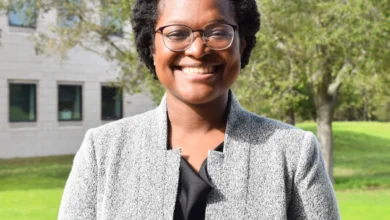
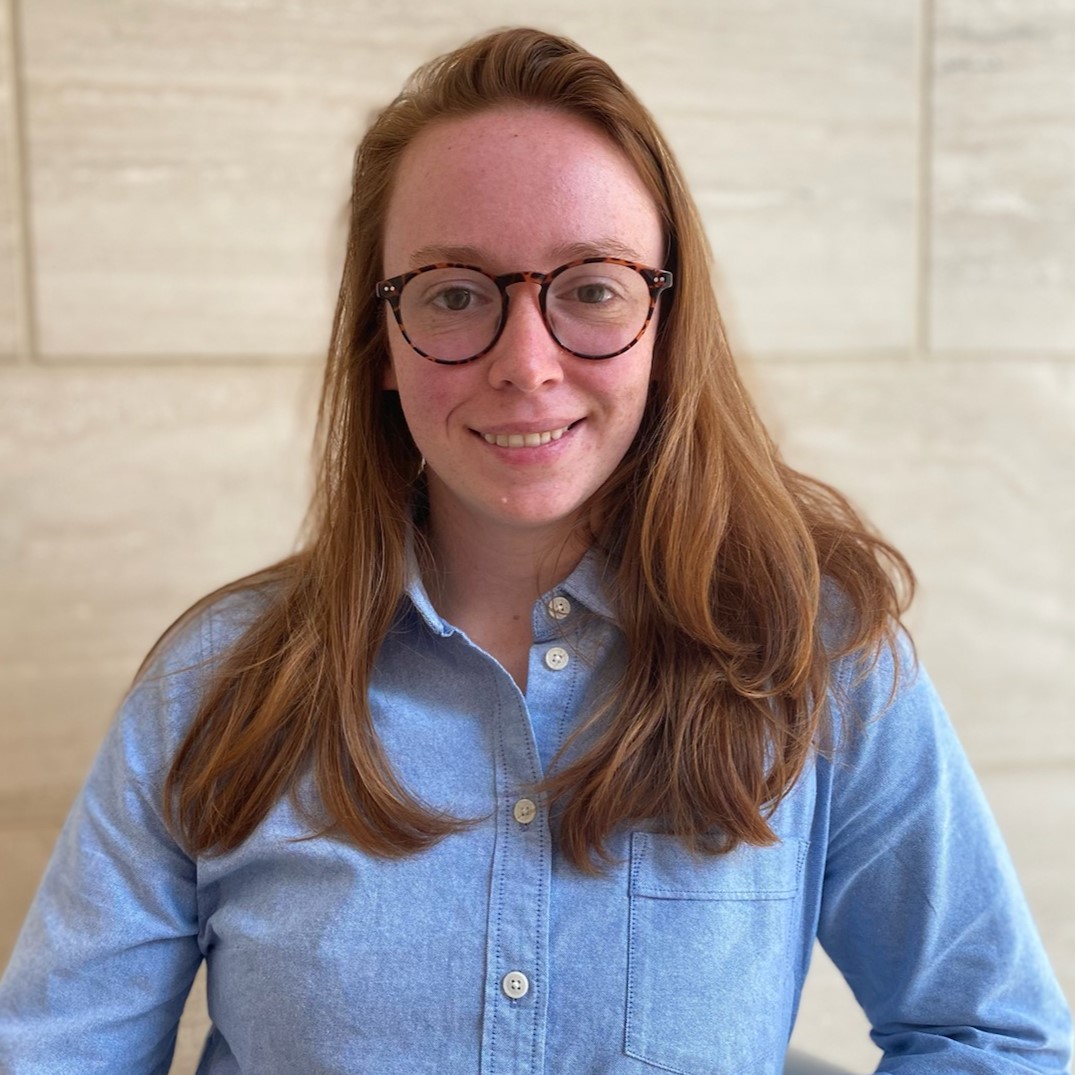
At the center of this computational shift is Dr. Emma Glass, a research scientist in the laboratory of Dr. James Yurkovich. Joining the Buck Institute in late 2023, Glass brings a specialized background in computational microbiology and biomedical engineering to an institution laser-focused on extending human healthspan. Funded in part by the Defense Advanced Research Projects Agency (DARPA), Glass and her colleagues are developing sophisticated whole-cell simulation software. By creating digital counterparts of living organisms, the research team aims to transform how science understands infectious diseases, antibiotic resistance, and, ultimately, the cellular mechanics of aging.
Bridging Applied Mathematics and Biomedical Engineering
Dr. Glass’s journey toward the vanguard of longevity science began far from the laboratories of Northern California. A native of Virginia, she cultivated a rigorous analytical foundation by earning a Bachelor of Science in Applied Mathematics from the College of William & Mary. Recognizing the immense potential to apply quantitative methods to biological systems, she pursued a Ph.D. in Biomedical Engineering at the University of Virginia, focusing heavily on computational microbiology.
When an opportunity arose to join the Buck Institute, Glass saw an ideal intersection for her skills. The institute, widely recognized as the world’s first independent research organization dedicated solely to deciphering the biology of aging, provided a unique ecosystem.
"I have a personal interest in wellness and longevity science, so when I saw the opportunity to join the Buck Institute, I was thrilled for the chance to merge my PhD work in computational microbiology with the science of aging," Glass notes. "This work has real potential to be deeply impactful since the cellular models we are building today for microbes could be the critical stepping stones to modeling human cells."
The DARPA Mandate: Simulating Bacterial Behavior
The immediate engine driving Glass’s current research is a grant from DARPA, an agency known for funding high-risk, high-reward technological breakthroughs that can radically alter national security and public health. Specifically, her work centers on engineering a computational simulation capable of predicting the precise physiological behavior of Escherichia coli (E. coli) when subjected to fluctuating environmental stressors and chemical agents.
In traditional microbiology, determining the efficacy of an antimicrobial agent requires extensive physical experimentation. Researchers must culture bacteria in petri dishes, administer varying concentrations of antibiotics, and observe survival rates over days or weeks. While effective, this process is time-consuming, expensive, and limited by the physical constraints of laboratory throughput.
Glass’s whole-cell simulator bypasses many of these physical hurdles. By mathematically modeling the complex networks of genes, proteins, and metabolic reactions inside E. coli, the software can calculate the precise minimum inhibitory concentration of an antibiotic required to halt bacterial growth—all within a digital environment.
The implications for infectious disease management are immediate. By predicting how specific bacterial strains respond to treatments before clinical intervention, medical professionals could theoretically tailor antibiotic regimens with unprecedented speed and accuracy. Yet, within the broader mandate of the Buck Institute, the bacterial model is merely a proof-of-concept. Mastering the computational simulation of a single bacterium provides a critical blueprint for scaling up to the vastly more complex architecture of human cells.
Team Science and the Convergence of Big Data
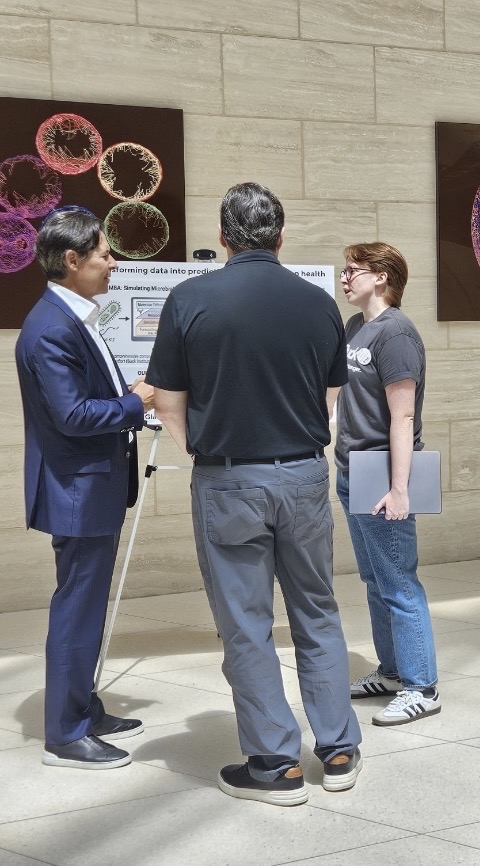
Cracking the code of a living cell requires more than individual brilliance; it demands a multidisciplinary approach known in modern research institutions as "team science." At the Buck Institute, Glass operates within a collaborative framework designed to merge wet-lab biology with dry-lab computation.
The research infrastructure is structured around two complementary pillars of DARPA’s Systems-Level Metabolic Synthesis (SMS) program: "Measure and Inform," which focuses on generating empirical biological data, and "Simulate and Predict," which focuses on building and refining the mathematical models.
This duality requires constant synergy. Glass works closely with other faculty members at the Buck Institute to generate massive, high-throughput experimental datasets. These datasets serve as the empirical bedrock that grounds the theoretical models in biological reality. Furthermore, the institute maintains critical external partnerships with industry leaders who supply specialized engineering expertise, enabling the team to scale their software architecture efficiently.
The integration of artificial intelligence and machine learning into the Buck Institute’s daily operations has further accelerated these efforts. By leveraging big data analytics, researchers can process millions of cellular variables simultaneously, refining their predictive models at a pace that would have been unimaginable a decade ago.
From Laboratory Bench to Computer Screen
To conceptualize the monumental shift occurring in computational biology, one must contrast traditional research methodologies with digital modeling. For decades, the standard scientific workflow for evaluating a drug candidate involved physical iteration: synthesize a compound, test it on a cellular culture, record the results, modify the compound, and repeat.
Glass describes her computational approach through a simpler analogy: "Right now, when scientists want to see how a cell reacts to a new medicine or change in its environment, they have to run thousands of physical experiments in a lab, which takes a long time and costs a lot of money. My work involves taking everything we know about a bacteria called E. coli and putting it into a computer to create a digital version of that cell."
Once established, this digital twin allows researchers to test hypotheses instantaneously. A scientist can introduce a virtual drug, alter temperature, or restrict nutrient availability, observing the simulated cell’s response in real time. Does the digital organism accelerate its growth? Does it trigger stress-response pathways? Does it perish?
By answering these questions computationally, researchers can filter out ineffective interventions before a single drop of reagent is purchased or a single animal model is engaged.
Broader Implications for Personalized Medicine and Healthspan
While the primary short-term utility of whole-cell simulation lies in pharmacology and infectious disease control, the long-term societal implications stretch far into the realm of preventive healthcare and longevity science.
Human aging is not a singular event; it is a systemic accumulation of cellular damage, metabolic dysfunction, and epigenetic drift across trillions of cells comprising various tissues and organs. Traditional medicine largely operates on a reactive, one-size-fits-all model, treating symptoms of age-related diseases—such as cardiovascular decline, neurodegeneration, and metabolic disorders—only after they manifest clinically.
Whole-cell and multi-cellular simulations offer a pathway toward predictive, personalized medicine. If researchers can successfully scale simulation frameworks from bacteria to human cells, the medical paradigm could shift dramatically.
In a future shaped by this technology, physicians could utilize patient-specific cellular data to construct digital twins of an individual’s organs or tissues. Clinicians could then test how various lifestyle interventions, dietary adjustments, pharmaceutical agents, or gene therapies might impact that specific patient’s cellular aging trajectory over decades. Instead of waiting for pathology to appear, healthcare providers could proactively manage healthspan with mathematical precision, mitigating cellular decline before it translates into chronic disease.
The Next Decade: Toward Multi-Cellular and System-Level Simulations
Looking ahead over the next five to ten years, the field of computational biology stands on the precipice of a historic transition. Programs like DARPA’s SMS initiative are actively pushing researchers to increase the complexity of their models by orders of magnitude.
For Emma Glass and her colleagues at the Buck Institute, the goal is clear: transition from simulating single, isolated bacterial cells to mapping entire, multi-cellular body systems.
"I am most excited about moving from simulating single cells to simulating entire body systems," Glass reflects. "In the next decade, I expect to see the first high-fidelity digital models of human cells. For those of us at the Buck Institute, this would be groundbreaking. It means we will be able to probe the mechanisms of biological aging at a depth that was once science fiction, potentially identifying interventions that could extend human healthspan by decades."
As computational power continues to expand alongside advancements in biotechnology, the boundary between biological science and computer science continues to blur. By turning biology into code, researchers at institutions like the Buck Institute are no longer passive observers of the aging process. Armed with algorithms, mathematics, and high-performance computing, they are transforming the fight against aging from a philosophical aspiration into an exact science.