The Context of Campus Polarization
In recent years, American higher education has faced increasing pressure as political and ideological divides have mirrored the volatility of the national climate. According to a 2023 report from the Foundation for Individual Rights and Expression (FIRE), a significant percentage of college students report feeling hesitant to share their political views due to fears of peer backlash or social alienation. This climate of self-censorship has prompted educators and administrators to seek pedagogical frameworks that prioritize constructive engagement over performative debate.
The Connecting on Campus series arrives at a moment when "bridging differences" has shifted from a soft-skill aspiration to a critical necessity for institutional health. The featured projects demonstrate that fostering connection does not require the erasure of conflicting beliefs, but rather the development of the structural and interpersonal capacity to remain in communication despite them.
Chronology of the Social Justice Alliance
The series provides a profound look at the Bowie State University (BSU) and University of Maryland (UMD) Social Justice Alliance, an initiative with roots in a tragedy that redefined the relationship between the two campuses. In 2017, Lt. Richard Collins III, a student at BSU, was murdered on the UMD campus in a racially motivated hate crime. The subsequent trauma necessitated a long-term, systemic response.
- 2017: The murder of Lt. Richard Collins III serves as the catalyst for a fundamental re-evaluation of safety, belonging, and racial equity between the historically Black institution (BSU) and the neighboring predominantly white institution (UMD).
- 2018–2020: Faculty and student leadership from both universities begin formalizing collaborative efforts, moving beyond symbolic gestures toward sustained academic and social integration.
- 2021–2023: The formalization of the BSU-UMD Social Justice Alliance allows for the creation of joint courses, inter-campus research projects, and community-building events.
- 2024: The production of the Connecting on Campus series documents the current state of these relationships, illustrating how students navigate the discomfort of historical grievances to build a future defined by collective accountability.
Case Studies in Interpersonal Engagement
The documentary series utilizes specific student interactions to analyze the efficacy of bridging strategies. At Dickinson College, the project highlights a unique alliance between the campus Republican and Democratic clubs. The collaboration, driven by the personal friendship of the club presidents, challenges the assumption that partisan identity must preclude civil cooperation. Data from the Bridging Differences in Higher Education Playbook, which underpins the series’ theoretical framework, suggests that when students engage in "perspective-getting"—the active effort to understand the motivations behind a peer’s viewpoint—the likelihood of developing entrenched animosity significantly decreases.
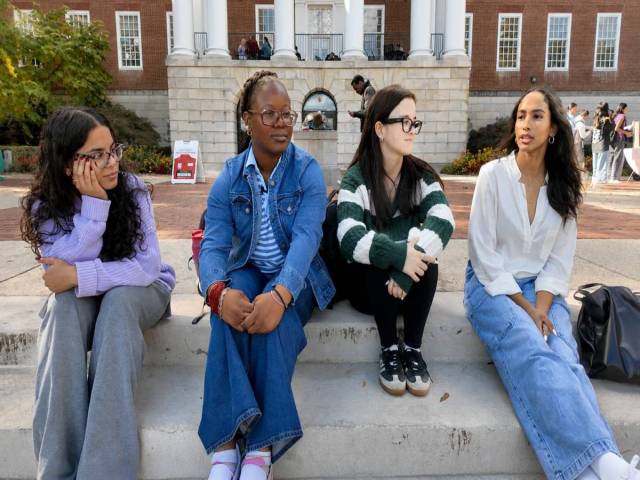
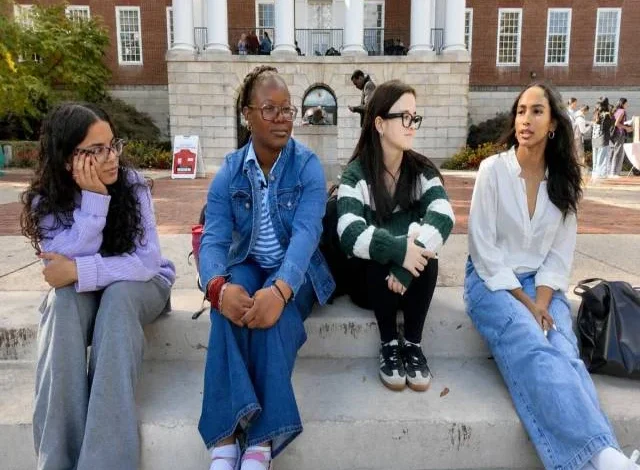
At the Iliff School of Theology, the series documents master’s and Ph.D. students engaging in high-stakes discussions regarding their visions for the United States. The footage captures the raw, often uncomfortable process of articulating personal values while listening to opposing viewpoints. Observers note that these discussions do not necessarily lead to consensus; rather, they lead to a deeper understanding of the "why" behind an individual’s belief system. This process is essential for mitigating the echo-chamber effect common in specialized academic settings, where the fear of offering a "wrong" opinion often stifles intellectual growth.
The Role of Intellectual Humility
A consistent theme throughout the episodes is the concept of intellectual humility—the recognition that one’s knowledge is limited and that others may possess valid, alternative information. In the episodes featuring graduate students, the participants demonstrate that admitting what one does not know can be a powerful tool for de-escalating conflict. By creating an environment where curiosity is prioritized over "winning" an argument, these students are able to bypass the defensive posturing that frequently derails political discourse.
This approach is supported by longitudinal research into conflict resolution, which indicates that when participants feel their core identities are acknowledged, they are more willing to engage with complex, multi-faceted arguments. The Connecting on Campus series serves as a practical, filmed demonstration of these psychological principles in action.
Official Responses and Institutional Impact
Administrators at the participating institutions have lauded the project for its raw depiction of the realities of student life. In statements regarding the series, representatives from the Social Justice Alliance emphasized that the goal is not to achieve superficial harmony. Instead, the objective is to build a community capable of confronting systemic indifference and hate.
"The work is not easy," notes Kelly Rafferty, an executive producer on the project. "It requires a commitment to showing up even when the conversations are difficult. Mrs. Dawn Collins, who co-founded the alliance after her son’s death, reminds us that everyone has a part to play in eradicating the ideology of intolerance. That is not a passive task; it is an active, ongoing responsibility."
Broader Implications for Higher Education
The implications of the Connecting on Campus series extend beyond the individual participants. As universities face existential challenges, including threats to academic freedom and budgetary constraints, the ability to maintain a culture of discourse is paramount. The series offers a template for other institutions:
- Normalization of Discomfort: Rather than shielding students from difficult topics, institutions should provide the tools to navigate them effectively.
- Structured Engagement: Spontaneous dialogue is rarely sufficient. Structured programs, such as those established at BSU and UMD, provide the necessary scaffolding for meaningful interaction.
- Focus on Shared Values: While political views may diverge, focusing on shared institutional and human values can provide a foundation for collaborative problem-solving.
The series concludes with a sobering yet optimistic call to action. It suggests that the current generation of students is not merely a passive audience to national polarization, but active participants in shaping a different kind of public square. By practicing empathy, curiosity, and courage, these students are attempting to reclaim the university as a space where, even in the absence of total agreement, a functioning and respectful community can be sustained.
As the academic cycle continues, the Connecting on Campus documentaries serve as both a record of past efforts and a roadmap for future initiatives. Whether through the reconciliation work at BSU and UMD or the collaborative political dialogues at Dickinson, the series demonstrates that the most significant barrier to connection is often the refusal to initiate the conversation. By providing a platform for these students to share their experiences, the Greater Good Science Center has contributed a substantial resource to the ongoing discourse on the role of empathy in modern democracy. The success of these initiatives suggests that while the work of bridging divides is indeed arduous, the outcome—a more resilient and informed student body—is an essential investment for the future of the nation.